


Microsoft Surface Laptop Ultra: Price, Specifications, Features, Release
Oct 08, 2026






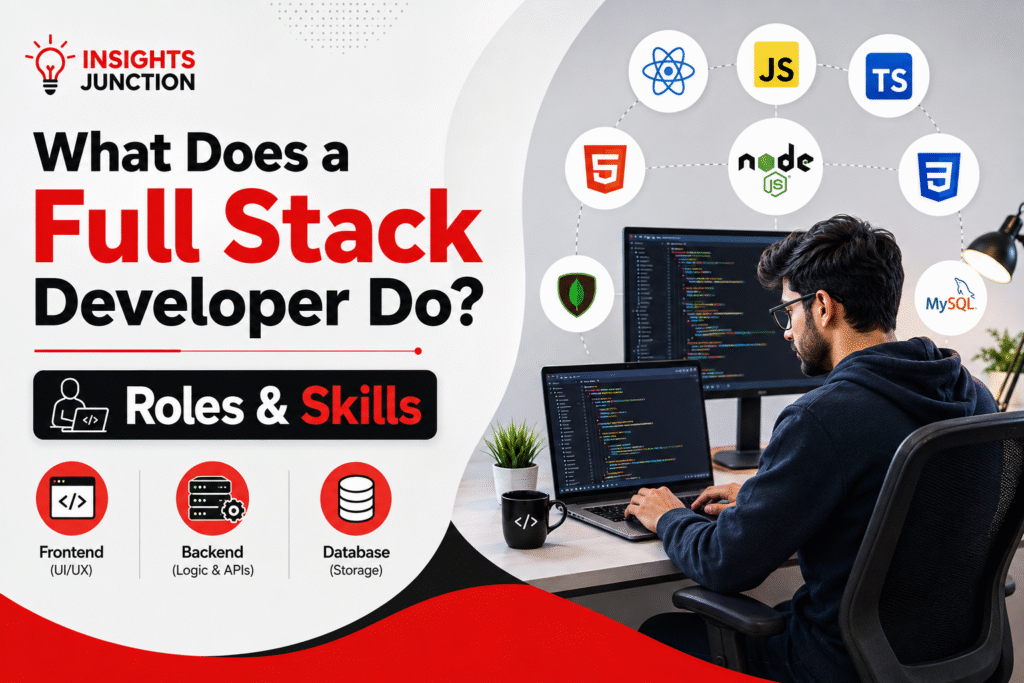






























































What Does a Full Stack Developer Do? Roles, Responsibilities, and Essential Skills

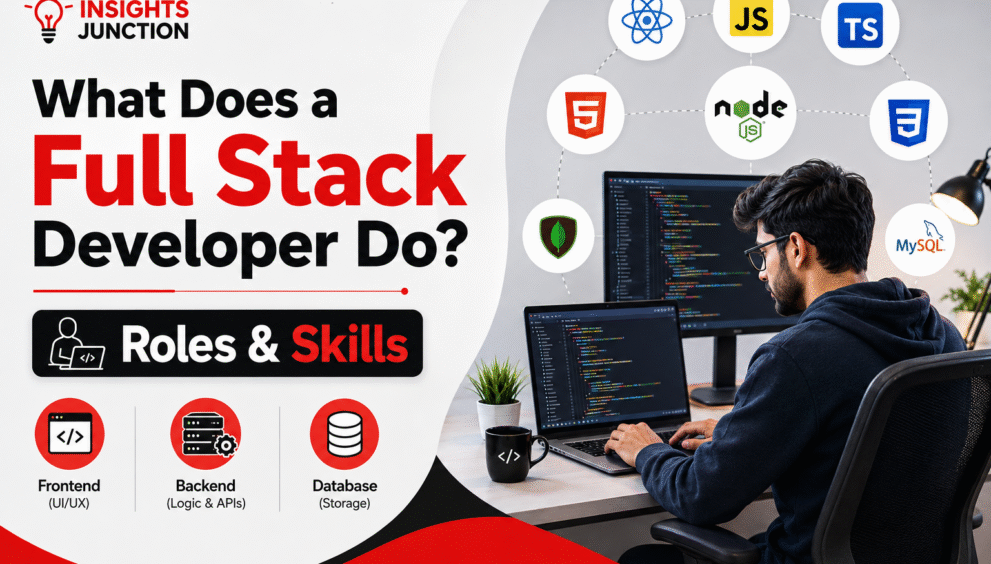
A single account creation feature can involve a form, browser validation, an API, password storage, a database, email verification, security checks, and deployment. A full stack developer works across these connected parts to build, test, release, and maintain a complete web application.
“Full stack” covers the front end, back end, databases, APIs, development tools, deployment, and basic infrastructure. It doesn’t mean mastering every language or framework. It means having enough breadth to contribute across the application and understand how each layer affects the others.
Full Stack Developers Connect the Entire Application
Full stack developers help turn product ideas into working features. Their exact duties depend on the company, project size, and level of experience.
They Build Interfaces Users Can Use
On the front end, developers write semantic HTML, organise CSS layouts, and add behaviour with JavaScript. They may build reusable components with React, Angular, Vue, or another framework.
They connect buttons, forms, tables, and other interface elements to APIs and application data. They also test features across browsers, screen sizes, keyboards, touch screens, and screen readers. Accessibility should be part of the work from the start, using guidance such as the WCAG standards.
They Create Server-Side Logic
The back end handles the rules behind each feature. A full stack developer may use JavaScript, Python, Java, C#, Ruby, PHP, or Go to process requests and return useful results.
This work can include registrations, payments, permissions, searches, notifications, and business workflows. Developers also create REST or GraphQL APIs, manage authentication and sessions, validate input, handle errors, and write tests for key behaviour.
They Work With Application Data
Full stack developers design how information is stored and retrieved. They may work with relational databases such as PostgreSQL or MySQL, and use NoSQL systems such as MongoDB when the data model suits that approach.
Typical tasks include creating tables, relationships, indexes, queries, migrations, and access rules. They don’t need to be database administrators, but they must protect sensitive data with secure queries, encryption practices, suitable retention rules, and controlled access.
Their Daily Work Turns Requirements Into Features
The role covers more than writing code. Full stack developers often take part in planning, review, testing, release, and support.
They Turn Requirements Into Technical Tasks
A developer reviews user stories, wireframes, acceptance criteria, and product goals before choosing an implementation. They identify the front-end, back-end, database, API, testing, and deployment work involved.
They also ask about edge cases. What happens when a user lacks permission, submits bad data, loses their connection, or repeats a request? These questions expose risks early and help teams split large features into smaller tasks.
They Build and Join the Layers
A typical feature may require a database change, a server endpoint, a user interface, and an outside service. The developer connects these pieces, then adds loading states, validation messages, empty states, and useful error messages.
They use Git for version control and pull requests for review. Good code is modular, readable, documented, and easy for another developer to change.
They Test, Deploy, and Maintain
Testing can include unit tests for small functions, integration tests for connected services, and end-to-end tests for complete user flows. Developers reproduce defects, fix them, and check browser behaviour and performance.
The work continues after release. Continuous integration, cloud platforms such as AWS, Azure, or Google Cloud, logs, error tracking, uptime checks, and resource monitoring help teams keep applications dependable. Docker can package an application and its requirements in a container, making local testing and deployment more consistent, as explained in the Docker platform documentation.
The Most Valuable Full Stack Skills Span Code and Collaboration
Employers usually value strong fundamentals and sound judgement more than a long list of frameworks. Tools change, but core web concepts remain useful.
Web and Programming Fundamentals Matter
A full stack developer needs semantic HTML, CSS Flexbox and Grid, responsive design, and JavaScript fundamentals. Asynchronous code, modules, browser APIs, and event handling are also important.
They should understand HTTP methods, status codes, headers, cookies, JSON, API design, validation, and error handling. Knowledge of data structures, algorithms, secure coding, accessibility, and at least one back-end language gives developers room to change tools when needed.
Databases, APIs, and Cloud Skills Add Reach
SQL and relational data modelling are essential for many applications. Developers should also understand API authentication, rate limits, versioning, documentation, Git workflows, command-line tools, Linux basics, environment settings, and secrets management.
Basic knowledge of containers, CI/CD pipelines, cloud storage, compute, networking, monitoring, caching, query tuning, and asset optimisation helps move software beyond a local machine. The 2025 Stack Overflow Developer Survey shows the wide range of languages, databases, frameworks, and cloud tools developers work with. It also shows why learning principles matters more than chasing every new tool.
Communication Improves Technical Decisions
Full stack developers explain trade-offs to product managers, designers, testers, security teams, and customers. They communicate blockers, risks, estimates, and progress in clear language.
They also balance speed, maintainability, user experience, security, and cost. Product thinking helps them understand why a feature matters, while analytical thinking helps them investigate unfamiliar failures.
Full Stack Developers Differ From Specialists
Job titles vary, so these boundaries are not fixed. A front-end developer may understand servers, and a back-end developer may write browser code.
Front-End Developers Focus on User Experience
Front-end developers concentrate on browser interfaces, visual detail, responsive layouts, accessibility, design systems, and client-side performance. They often work closely with designers and may consume APIs without owning the server code.
Back-End Developers Focus on Services and Data
Back-end developers focus on business rules, APIs, databases, integrations, security, reliability, and system design. Some specialise in distributed systems, queues, data processing, or infrastructure that supports several applications.
Full Stack Developers Cover the Complete Feature
A full stack developer can build a feature across the interface, server, and database. This can reduce hand-off delays in startups, agencies, small teams, and product groups.
That breadth has limits. Complex security, infrastructure, accessibility, data, or performance work may still need specialist support. One developer should not be expected to replace an entire engineering department.
The Role Changes With Career Stage
Responsibility grows with experience, technical judgement, and the complexity of the product.
Junior Developers Learn Through Guided Work
Junior developers often fix bugs, add small features, write tests, improve documentation, and work within an existing architecture. Code review teaches them how the team handles APIs, databases, Git, debugging, and releases.
A strong portfolio should include complete working applications, not only interface mock-ups. A small deployed project with authentication, stored data, tests, source code, and clear limitations can show useful range.
Mid-Level Developers Own Features
Mid-level developers design and build moderately complex features, make choices about data models and APIs, and help investigate production problems. They work with product and design partners and review other people’s code.
They also spot technical debt and suggest practical improvements rather than waiting for a large rewrite.
Senior Developers Shape Systems
Senior full stack developers make architecture decisions that support security, reliability, scale, and maintenance. They set testing practices, guide migrations, review technology choices, mentor colleagues, and lead technical discussions.
They also consider observability, disaster recovery, operational cost, and long-term support. Seniority depends on judgement and leadership, not on knowing the most frameworks.
Practical Features Show How Full Stack Work Fits Together
Registration Needs More Than a Form
An account feature needs a form, client and server validation, a user record, duplicate-account handling, verification, authentication, and abuse controls. Passwords should never be stored as plain text. OWASP recommends modern password hashing methods such as Argon2id, bcrypt, or PBKDF2 in its password storage guidance.
The developer tests both the browser flow and server response, including failed requests and invalid input.
Checkout Connects Several Services
An online checkout may include a cart, totals, discounts, shipping, order status, payment requests, and customer messages. A server-side payment integration must handle successful, failed, cancelled, and pending payments.
Stripe’s Checkout documentation shows how a hosted checkout can support payment collection. Developers must also handle webhooks, duplicate requests, interrupted payments, and order consistency without storing unnecessary payment data.
Dashboards Join Data With Design
A dashboard begins with clear metrics and user permissions. The developer writes queries or aggregation logic, exposes protected results through an API, and builds charts, tables, filters, and date controls.
Good implementation includes empty, delayed, incomplete, and unavailable data states. Pagination or caching may be needed as records grow, and authorisation checks must ensure each user sees only permitted information.
Practical Ways to Build Full Stack Capability
Choose one coherent path first: a front-end approach, a back-end language or framework, and a primary database. Learn HTTP, Git, SQL, testing, and deployment alongside it instead of switching frameworks every few weeks.
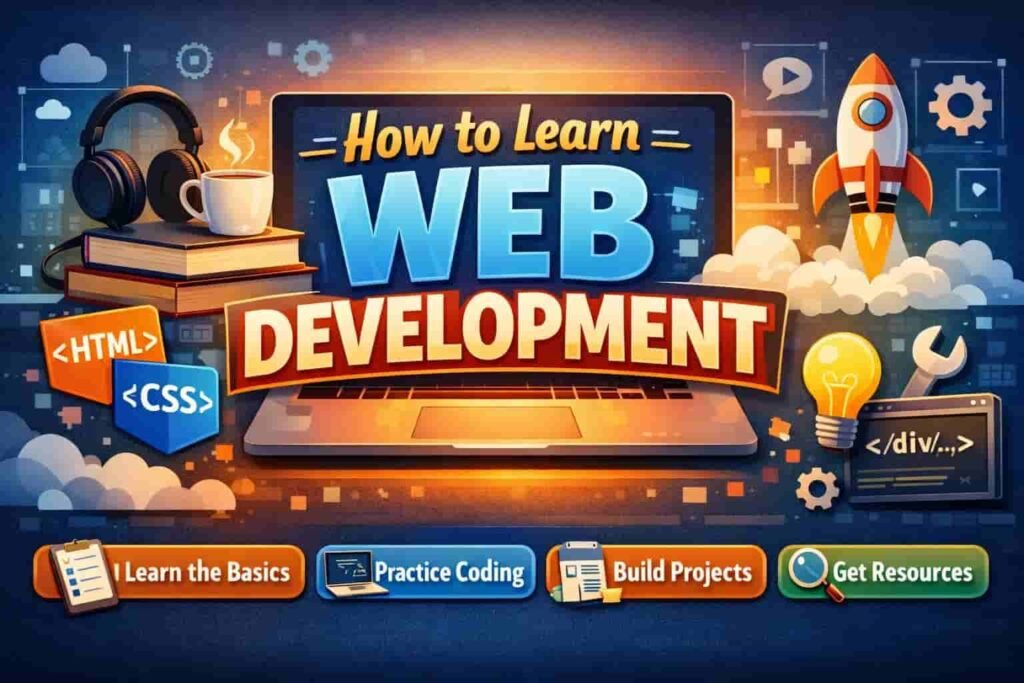
If you are starting from scratch, follow this Web Development Beginner Roadmap to learn the core technologies and progress toward full stack development.
Build projects such as a booking system, task manager, content platform, finance tracker, or small shop using a payment sandbox. Publish the code, live deployment, README, tests, architecture notes, trade-offs, and known limitations.
Develop production habits early. Keep secrets in environment variables, validate data on both sides, log useful errors, review code, monitor deployments, and improve security, accessibility, performance, and documentation after the first working release.
Read More Details: What Does a Full Stack Developer Do
Conclusion:
A full stack developer connects user interfaces, server-side logic, databases, APIs, tests, deployments, and ongoing maintenance. The role requires breadth, but that breadth must rest on strong programming, web, data, security, and communication skills.
The best way to build those skills is practical: learn one complete stack, create working projects, practise Git and testing, deploy your applications, and explain your technical choices. A full stack developer helps turn an idea into a usable, maintainable web application, from the first interface interaction to the systems that support it.
Frequently Asked Questions
1. What does a full stack developer do?
A full stack developer works on both the front end and back end of web applications. Their responsibilities can include building user interfaces, developing server-side logic, working with databases and APIs, testing features, deploying applications, and maintaining them after release.
2. What skills does a full stack developer need?
A full stack developer typically needs skills in HTML, CSS, JavaScript, APIs, databases, Git, testing, security, and at least one back-end programming language. Basic knowledge of cloud platforms, Docker, CI/CD, accessibility, and deployment can also be valuable.
3. What is the difference between a full stack developer and a front-end developer?
A front-end developer primarily focuses on the user interface, responsive design, accessibility, and browser-side functionality. A full stack developer can work across the front end, back end, database, APIs, testing, and deployment of an application.
4. What technologies do full stack developers use?
Full stack developers can use technologies such as HTML, CSS, JavaScript, React, Angular, Vue, Node.js, Python, Java, PHP, PostgreSQL, MySQL, MongoDB, Git, Docker, and cloud platforms such as AWS, Azure, and Google Cloud. The specific technology stack depends on the project and organisation.
5. How can I become a full stack developer?
Start by learning web fundamentals such as HTML, CSS, JavaScript, HTTP, Git, and SQL. Then choose one front-end approach, one back-end language or framework, and a primary database. Build and deploy complete projects, practise testing and security, and gradually learn tools such as Docker, CI/CD, and cloud platforms.