


Yamaha R15 V4 vs Yamaha YZF-R2
Sep 14, 2026













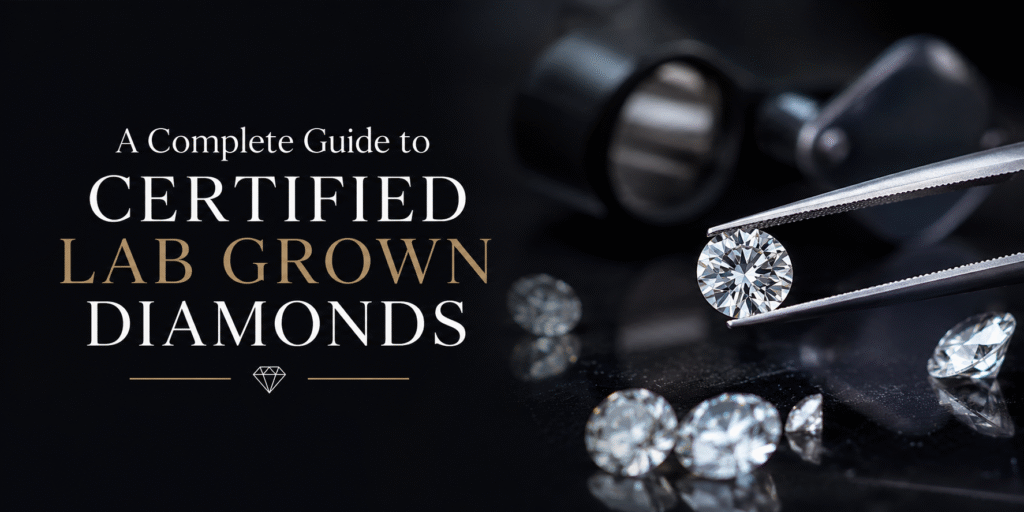





















































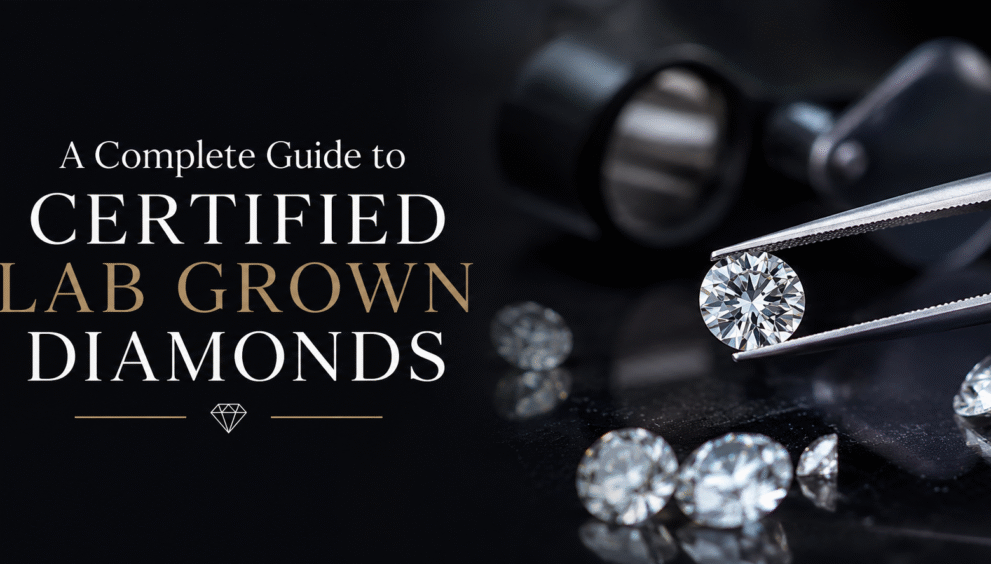
A Complete Guide to Certified Lab Grown Diamonds

Let’s be honest. Buying a diamond is one of the most emotionally charged purchases most people will ever make. It is tied to love, commitment, and memories that last a lifetime. So when someone tells you that a diamond grown in a laboratory is just as real as one pulled from the earth, your first instinct might be skepticism.
That skepticism is completely fair. But here is what is worth knowing: lab grown diamonds are not fake diamonds. They are not cubic zirconia. They are not moissanite. They are, chemically and physically, real diamonds and the certification behind them proves exactly that.
This guide will walk you through everything you need to know about certified lab grown diamonds, from how they are made to why certification matters, and whether they are the right choice for you.
What Exactly Is a Lab Grown Diamond?
A lab grown diamond is a diamond that was created in a controlled laboratory environment rather than forming naturally underground over billions of years. The end result, however, is the same thing: pure carbon atoms arranged in a crystal structure that gives diamonds their legendary hardness, brilliance, and sparkle.
Two primary methods are used to create lab grown diamonds.
High Pressure High Temperature (HPHT) mimics the natural conditions deep within the earth. A small diamond seed is placed under extreme heat and pressure, with temperatures above 1,400°C and pressure exceeding 1.5 million pounds per square inch, causing carbon to crystallize around it. This process can produce a finished diamond in a matter of weeks.
Chemical Vapor Deposition (CVD) takes a different approach. A diamond seed is placed inside a chamber filled with carbon-rich gas. When energy is applied, the gas breaks down and carbon atoms slowly deposit onto the seed, layer by layer, building a diamond from the ground up. CVD diamonds are especially popular because they can be grown in larger sizes and with greater control over quality.
Both methods produce genuine diamonds. A trained gemologist cannot tell them apart from mined diamonds with the naked eye, and even high-end equipment requires specific testing to distinguish them.
Why Certification Matters More Than You Think
Here is where a lot of buyers make a costly mistake. They fall in love with a stone’s look and skip the paperwork. Do not do this.
A diamond certificate, also called a grading report, is an independent third-party evaluation of your diamond’s quality. It is the difference between trusting a salesperson’s word and having documented proof of what you are actually paying for.
For lab grown diamonds specifically, certification serves two critical purposes.
First, it confirms that the stone is genuinely a diamond and not a simulant like moissanite or cubic zirconia. Second, it documents the diamond’s quality characteristics so you know exactly what you are getting for your money.
Without a certificate, two diamonds that look nearly identical in a display case could differ wildly in quality and price. You would have no way of knowing.
The Major Grading Laboratories You Need to Know
Not all certificates are created equal. The reputation and standards of the issuing laboratory matter enormously. Here are the organizations whose reports carry the most weight.
GIA (Gemological Institute of America) is widely considered the gold standard in diamond grading. Their standards are strict, their graders are extensively trained, and their reports are accepted universally across the industry. GIA began issuing reports for lab grown diamonds in 2019 and now grades them using the same rigorous criteria as mined diamonds.
IGI (International Gemological Institute) has become one of the most common certification bodies for lab grown diamonds. IGI grades a significant volume of lab grown stones and their reports are detailed and generally well respected in the market. Some industry professionals note that IGI grading can occasionally be slightly more generous than GIA, so it is worth being aware of that when comparing prices.
AGS (American Gem Society) is another highly respected laboratory known for its strict grading standards, particularly around cut quality. AGS uses a numerical grading scale from 0 to 10 instead of letter grades, which some buyers find more intuitive.
GCAL (Gem Certification and Assurance Lab) offers detailed reports that include a light performance analysis, giving you additional data about how your diamond actually interacts with light. This is a useful detail for buyers who prioritize brilliance above all else.
When shopping, always ask whether the diamond comes with a certificate from one of these recognized labs. A certificate from an in-house or obscure lab is not worth the paper it is printed on.
Understanding the 4 Cs in the Context of Lab Grown Diamonds
Every diamond, whether mined or lab grown, is evaluated on the same four criteria: Cut, Color, Clarity, and Carat. Understanding these will help you make a smarter purchasing decision.
Cut is arguably the most important of the four. It refers to how well the diamond has been shaped and faceted, which directly determines how much light it reflects. A poorly cut diamond will look dull regardless of its other qualities. Look for Excellent or Ideal cut grades.
Color is graded on a scale from D (colorless) to Z (noticeably yellow or brown). For most buyers, diamonds in the D to F range are the most desirable, but stones in the G to H range can look virtually colorless to the naked eye at a significantly lower price point. Lab grown diamonds can achieve higher color grades more consistently than mined stones, which is one of their genuine advantages.
Clarity measures the presence of internal inclusions and external blemishes. The scale runs from Flawless to Included. For most people, a VS1 or VS2 grade offers an excellent balance. The inclusions are invisible without magnification, but the price is considerably more reasonable than a Flawless stone.
Carat refers to the diamond’s weight, not its size, though the two are closely related. One carat equals 0.2 grams. Lab grown diamonds allow you to get a larger carat weight for a significantly lower price compared to mined diamonds of equivalent quality.
The Real Price Difference and What It Means for Buyers
This is where lab grown diamonds genuinely change the conversation.
In recent years, lab grown diamonds have become substantially more affordable than their mined counterparts, often 50% to 70% less expensive for a comparable stone. A 1.5 carat, VS1, F color, Excellent cut lab grown diamond that might cost around $2,500 could easily run $8,000 or more if it were mined.
For many buyers, this price difference represents a genuine opportunity. It means you can either spend the same budget and get a significantly larger, higher quality stone, or spend less and redirect those savings elsewhere toward a honeymoon, a down payment, or an investment account.
It is worth knowing, however, that lab grown diamonds have experienced a notable decline in resale value in recent years as production has increased and prices have dropped. If you are buying a diamond as a long-term financial investment, mined diamonds still hold their value more reliably. But if you are buying a diamond to wear and enjoy, which is what most people are actually doing, the value proposition of lab grown stones is hard to argue with.
How to Read a Lab Grown Diamond Certificate
When you receive a certificate, here is what to look for.
The report will clearly state whether the diamond is lab grown, laboratory created, or synthetic. All three terms mean the same thing. It will also specify the growth method, either HPHT or CVD. This is important because some buyers have preferences, and it is good to know what you are getting.
Beyond that, you will see the grades for Cut, Color, Clarity, and Carat, along with measurements of the diamond’s proportions and details about its fluorescence.
One important detail worth knowing: GIA now laser inscribes the certificate number directly onto the girdle of lab grown diamonds. You can verify this inscription under magnification and cross-reference it with the GIA online registry to confirm the stone in your ring matches the certificate in your hand. This is a simple but powerful protection against fraud.
Are Lab Grown Diamonds Ethical and Sustainable?
This is a question many buyers are asking, and it deserves an honest answer rather than a marketing pitch.
Lab grown diamonds do sidestep the humanitarian concerns associated with conflict diamonds from certain mining regions. They also avoid the land disruption and ecosystem damage caused by open pit mining. For buyers who are genuinely motivated by these concerns, lab grown diamonds offer a cleaner alternative.
That said, the environmental picture is not entirely simple. Growing diamonds in a laboratory requires a significant amount of energy, particularly for the HPHT method. The environmental impact depends heavily on whether that energy comes from renewable sources or fossil fuels, which varies by manufacturer.
If sustainability is a priority for you, it is worth asking the retailer specifically about the energy source used in producing the diamond. Some manufacturers are transparent about this; others are not.
Practical Tips Before You Buy
A few things worth keeping in mind as you shop.
Always buy a certified stone from a recognized lab. This is non-negotiable. If a seller cannot provide a GIA, IGI, or AGS certificate, walk away.
Compare certificates, not just prices. Two diamonds at similar prices can differ significantly in quality. A slightly larger stone with a lower cut grade is almost always a worse buy than a smaller stone with an Excellent cut.
Ask to see the diamond in person or request high resolution videos. Online retailers often provide 360 degree videos that let you see how the stone performs in real light, which is far more informative than a photograph.
Do not obsess over Flawless or D color grades. The difference between a D and an F, or between Flawless and VS1, is invisible to the naked eye in most cases. Spending extra money for the top grades is primarily a psychological satisfaction, which is valid, but worth knowing going in.
Final Thoughts
A certified lab grown diamond is a real diamond. It carries the same physical properties, the same brilliance, and the same emotional weight as any stone pulled from the ground, backed by documentation from an independent expert who has examined it with professional-grade equipment.
The certification is what transforms a beautiful object into a verified, trustworthy purchase. It is the part of buying a diamond that does not involve romance or impulse. It is the part that protects you.
Whether you are shopping for an engagement ring, an anniversary gift, or simply something that will outlast you and be passed down through your family, the combination of a lab grown diamond and a certificate from a reputable grading laboratory is, for most buyers today, a genuinely excellent choice.
Take your time, ask the right questions, and make sure the certificate tells you exactly what you are getting. The rest is yours to decide.