


Tesla Roadster Price in India, Launch Date, Range,
Oct 14, 2026



























































Ai in Education: Benefits, Challenges, Real Examples & Future of Learning

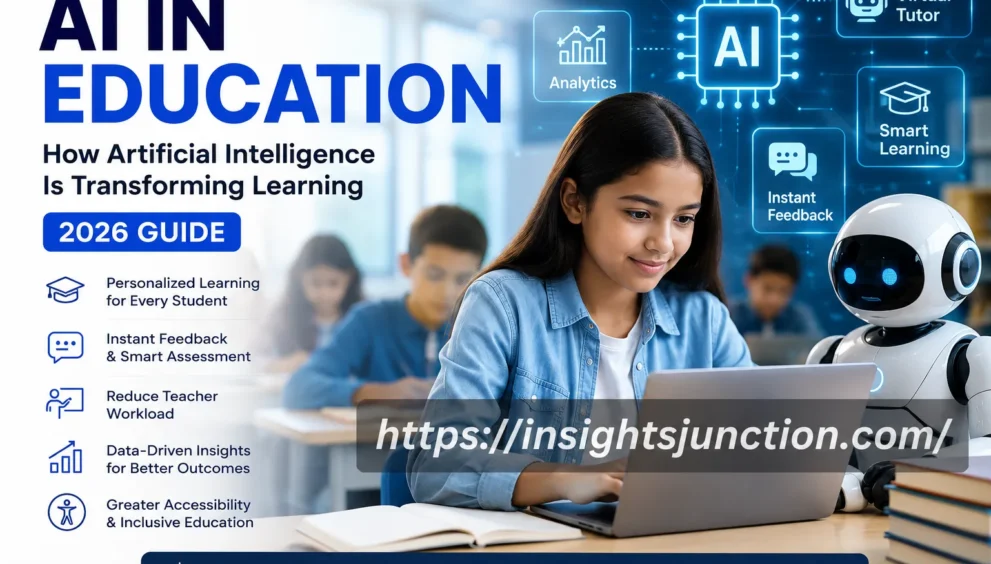
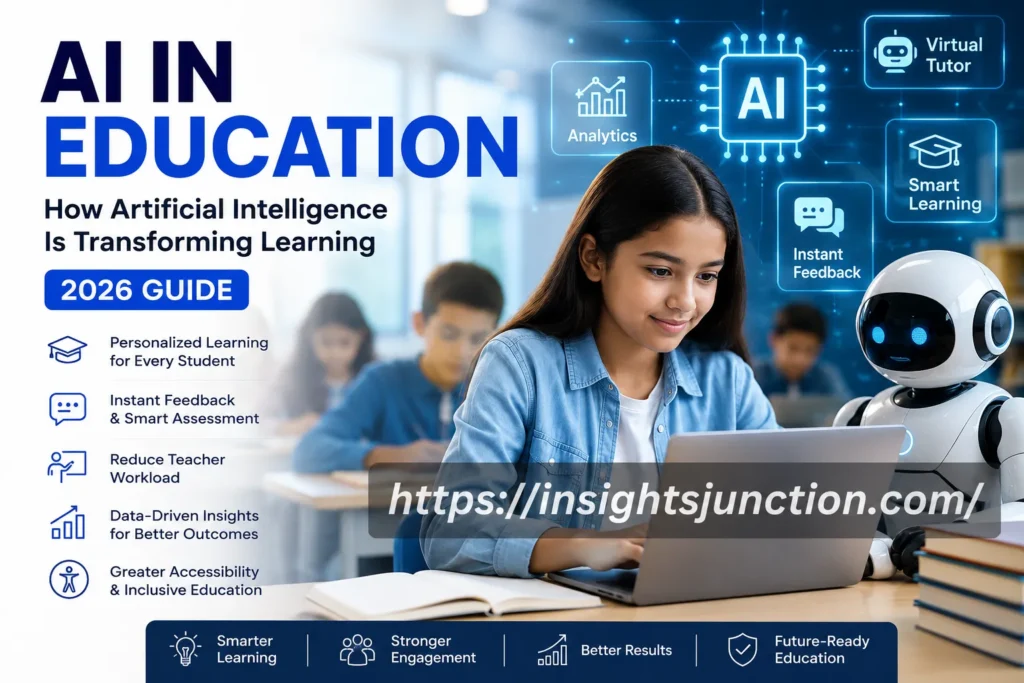
Artificial Intelligence (AI) is no longer a futuristic concept—it has become an essential part of modern education. From personalized learning platforms and AI tutors to automated grading systems and virtual classrooms, AI is transforming the way students learn and teachers teach.
Schools, colleges, universities, and online learning platforms are increasingly adopting AI-powered tools to improve learning outcomes, reduce administrative work, and create more engaging educational experiences. Students can now receive instant feedback, access personalized study plans, and learn at their own pace, while educators can spend less time on repetitive tasks and more time mentoring learners.
The rapid rise of tools like ChatGPT, Google Gemini, Microsoft Copilot, Khanmigo, Duolingo Max, and NotebookLM has accelerated AI adoption in education worldwide. Rather than replacing teachers, these technologies are helping educators become more productive and enabling students to develop new ways of learning.
In this comprehensive guide, you’ll learn what AI in education is, how it works, its biggest advantages, real-world applications, and why it is shaping the future of education in 2026 and beyond.
What Is AI in Education?
AI in education refers to the use of Artificial Intelligence technologies such as machine learning (ML), natural language processing (NLP), computer vision, and predictive analytics to improve teaching, learning, assessment, and educational management.
Unlike traditional educational software that follows fixed rules, AI systems continuously learn from user interactions. They analyze a student’s strengths, weaknesses, learning speed, and behavior to provide customized recommendations.
For example, if a student struggles with algebra but performs well in geometry, an AI-powered learning platform can automatically provide more algebra practice while allowing the student to progress faster in geometry.
This personalized approach makes learning more effective than the traditional one-size-fits-all classroom model.
How Does AI Work in Education?
AI systems collect and analyze learning data from students.
This data may include:
- Quiz scores
- Assignment performance
- Study habits
- Time spent on lessons
- Common mistakes
- Learning pace
Using advanced algorithms, AI identifies patterns and recommends the most suitable learning path for each student.
For teachers, AI can automatically generate lesson plans, summarize classroom performance, grade assignments, and identify students who may need additional support.
Instead of replacing teachers, AI acts as an intelligent assistant that helps improve teaching efficiency.
Why AI Is Revolutionizing Education
Traditional classrooms often face several challenges.
For example:
- Every student learns differently.
- Teachers have limited time for individual attention.
- Grading assignments consumes many hours.
- Large classrooms make personalized teaching difficult.
Artificial Intelligence addresses many of these problems.
Instead of delivering the same lesson to every student, AI adapts content according to individual needs.
Students who learn quickly can move ahead, while others receive additional explanations without feeling left behind.
This shift toward adaptive learning is one of the biggest reasons educational institutions worldwide are investing heavily in AI technologies.
Key Benefits of AI in Education
1. Personalized Learning Experience
One of the greatest advantages of AI is personalized education.
Traditional classrooms generally follow a fixed curriculum and teaching pace. However, not every student learns at the same speed.
AI-powered platforms analyze each learner’s progress and automatically adjust lessons based on their understanding.
For example:
- Advanced students receive more challenging content.
- Struggling learners receive additional practice.
- Learning paths change dynamically based on performance.
This helps students stay motivated while improving learning outcomes.
2. Instant Feedback Improves Learning
Students no longer need to wait several days for assignment results.
AI tools provide immediate feedback on:
- Grammar
- Writing quality
- Coding errors
- Mathematics
- Language pronunciation
Instant corrections allow students to learn from mistakes while the topic is still fresh in their minds.
This continuous feedback loop significantly improves knowledge retention.
3. Reduces Teachers’ Administrative Work
Teachers spend a large portion of their day performing repetitive administrative tasks.
These include:
- Grading assignments
- Preparing lesson plans
- Recording attendance
- Managing classroom data
- Creating quizzes
AI can automate many of these activities.
As a result, teachers gain more time to focus on classroom discussions, mentoring students, and developing creative learning experiences.
Rather than replacing educators, AI enables them to spend more time doing what humans do best—teaching and inspiring.
4. Adaptive Learning Makes Education More Effective
Adaptive learning platforms continuously monitor student performance.
If a learner repeatedly struggles with a particular topic, AI automatically recommends:
- Additional videos
- Practice questions
- Interactive exercises
- Easier explanations
Similarly, students mastering concepts quickly can skip repetitive lessons and move on to advanced topics.
This flexibility increases both efficiency and engagement.
5. Better Accessibility for Every Student
AI has significantly improved educational accessibility.
Students with disabilities can now benefit from:
- Text-to-speech tools
- Speech recognition
- Live captions
- Real-time language translation
- Personalized reading support
Similarly, multilingual classrooms benefit from AI translation tools that help students understand lessons regardless of their native language.
This creates a more inclusive learning environment.
6. Data-Driven Decision Making
Educational institutions collect enormous amounts of academic data.
AI helps convert this information into meaningful insights.
For example, schools can identify:
- Students at risk of failing
- Attendance patterns
- Learning gaps
- Course effectiveness
- Teacher performance trends
Early identification allows schools to intervene before problems become serious.
7. Enhanced Student Engagement
AI makes learning interactive rather than passive.
Students can engage with:
- AI tutors
- Educational chatbots
- Interactive simulations
- Virtual laboratories
- Gamified quizzes
This hands-on learning approach increases participation and helps students better understand complex concepts.
Real-World Examples of AI in Education
Artificial Intelligence is already being used in classrooms worldwide.
Here are some of the most popular examples.
ChatGPT for Learning
Many students now use ChatGPT to:
- Understand complex topics
- Generate study notes
- Practice coding
- Improve writing
- Solve mathematical problems
When used responsibly, ChatGPT acts as a personal learning assistant rather than a replacement for independent thinking.
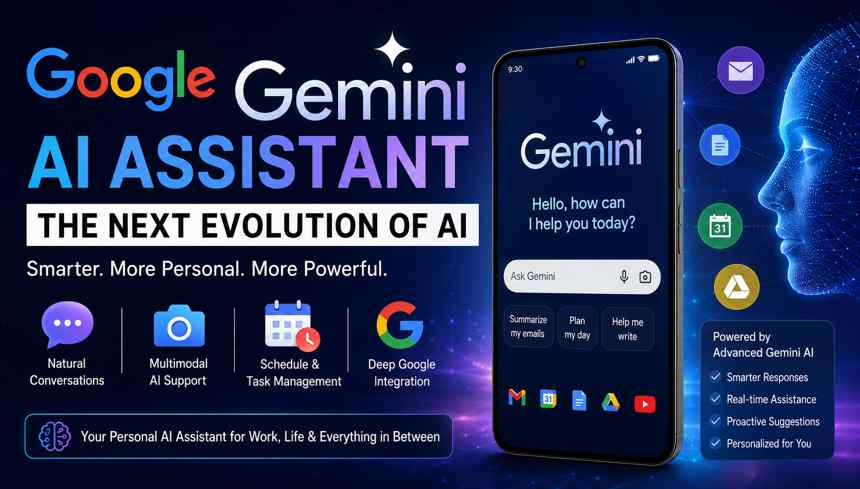
Google Gemini for Education
Google’s AI platform assists students and teachers by:
- Creating lesson summaries
- Generating classroom activities
- Answering educational questions
- Supporting collaborative learning
Its integration with Google Workspace makes it useful for schools already using Google’s productivity tools.
Khanmigo by Khan Academy
Khan Academy introduced Khanmigo, an AI-powered tutor that guides students through problem-solving instead of simply providing answers.
This encourages critical thinking while supporting independent learning.
Duolingo Max
Language learners benefit from AI-powered conversations and explanations.
Instead of memorizing vocabulary alone, students practice realistic conversations with AI.
Microsoft Copilot
Teachers and students use Microsoft Copilot to:
- Draft documents
- Create presentations
- Summarize research
- Organize study materials
- Improve productivity
Grammarly
Millions of students rely on Grammarly to improve:
- Grammar
- Vocabulary
- Sentence clarity
- Academic writing
The AI assistant helps learners develop stronger communication skills.
NotebookLM
NotebookLM allows students to organize notes, summarize documents, and interact with study materials using AI.
It is particularly useful for research-intensive subjects and exam preparation.
Popular AI Tools Used in Education
| AI Tool | Primary Use |
| ChatGPT | Homework assistance, explanations, writing |
| Google Gemini | Lesson planning, research, classroom support |
| Khanmigo | Personalized tutoring |
| Grammarly | Writing improvement |
| Duolingo Max | Language learning |
| Microsoft Copilot | Productivity and classroom tasks |
| NotebookLM | Research and note organization |
| Quizizz AI | Quiz creation and assessments |
| Canva AI | Educational presentations and visual learning |
AI Is Changing the Role of Teachers
One common misconception is that AI will replace teachers.
In reality, AI is changing the teacher’s role rather than eliminating it.
Teachers are becoming:
- Learning mentors
- Critical thinking coaches
- Classroom facilitators
- Emotional supporters
- Technology guides
AI handles repetitive tasks, while teachers continue providing creativity, empathy, motivation, and real-world understanding.
The future classroom is likely to combine the efficiency of AI with the human expertise of educators, creating a more personalized and engaging learning experience.
Challenges and Risks of AI in Education
While Artificial Intelligence offers numerous benefits, it also introduces challenges that schools, teachers, students, and policymakers must address. AI should enhance education—not replace critical thinking or responsible teaching.
1. Data Privacy and Security
Most AI-powered educational platforms collect student data to personalize learning experiences. This data may include:
- Academic performance
- Learning habits
- Attendance records
- Assignment submissions
- Personal information
If this information is not properly protected, it can lead to privacy concerns. Educational institutions should choose AI tools that comply with data protection regulations and clearly explain how student data is collected, stored, and used.
2. Over-Reliance on AI
AI can solve problems, generate essays, and answer questions within seconds. While this improves productivity, excessive dependence on AI may reduce students’ ability to think independently.
Students should use AI as a learning assistant—not as a shortcut for completing assignments without understanding the concepts.
Teachers also play a key role in encouraging original thinking, creativity, and problem-solving skills.
3. Accuracy and AI Hallucinations
AI-generated content is not always correct.
Sometimes AI models may produce inaccurate, outdated, or misleading information. This is commonly referred to as an AI hallucination.
For this reason, students should always verify important facts using reliable textbooks, academic journals, or trusted educational resources before relying on AI-generated answers.
4. Bias in AI Systems
AI models learn from existing datasets. If those datasets contain bias, AI outputs may also reflect those biases.
Educational institutions must ensure that AI tools are regularly evaluated for fairness, inclusivity, and transparency to provide equal learning opportunities for all students.
5. Digital Divide
Not every student has access to high-speed internet, modern devices, or premium AI tools.
This digital divide can create unequal learning opportunities between students in well-equipped schools and those in under-resourced communities.
Expanding affordable access to technology remains an important goal for governments and educational organizations.
AI vs Traditional Learning
The following comparison highlights how AI-powered education differs from traditional teaching methods.
| Feature | Traditional Learning | AI-Powered Learning |
| Learning Pace | Same for everyone | Personalized for each student |
| Feedback | Delayed | Instant |
| Assessment | Manual | Automated & adaptive |
| Teacher Workload | High | Reduced with AI assistance |
| Student Support | Limited classroom time | Available anytime through AI tools |
| Learning Resources | Fixed | Dynamic and personalized |
| Accessibility | Limited | Improved with translation, captions, and assistive features |
Rather than replacing traditional classrooms, AI complements them by making education more flexible and learner-focused.
Will AI Replace Teachers?
One of the most frequently asked questions is whether AI will replace teachers.
The simple answer is No.
Teaching involves far more than delivering information.
Teachers provide:
- Emotional support
- Classroom leadership
- Critical thinking guidance
- Creativity
- Motivation
- Ethical decision-making
- Social interaction
AI cannot replicate empathy, human relationships, or the ability to inspire students.
Instead, AI is becoming a powerful assistant that allows teachers to spend less time on repetitive tasks and more time helping students succeed.
Future of AI in Education (2026–2030)
Artificial Intelligence is expected to become even more integrated into education over the next few years.
Some major trends include:
1. AI-Powered Personal Tutors
Every student could have access to an AI tutor that provides explanations, practice questions, and personalized study plans based on their progress.
2. Smarter Virtual Classrooms
Future online classrooms may use AI to automatically:
- Translate lessons into multiple languages.
- Generate meeting summaries.
- Recommend additional learning materials.
- Track student engagement in real time.
3. Automated Curriculum Planning
AI may help teachers design lesson plans aligned with curriculum standards while suggesting activities tailored to different learning levels.
4. AI-Based Career Guidance
Students may receive personalized career recommendations based on:
- Interests
- Academic strengths
- Skills
- Learning behavior
- Industry trends
This could help learners make better educational and career decisions.
5. Virtual Reality (VR) and AI Integration
AI combined with VR and Augmented Reality (AR) could create immersive learning experiences.
Imagine biology students exploring the human body in 3D or history students virtually visiting ancient civilizations.
Such experiences make learning more engaging and memorable.
Best Practices for Using AI in Education
To maximize the benefits of AI while minimizing risks, consider these best practices:
For Students
- Use AI to understand concepts rather than copy answers.
- Verify important information using trusted sources.
- Develop independent thinking alongside AI support.
- Avoid submitting AI-generated work without review.
For Teachers
- Use AI to automate routine administrative tasks.
- Encourage responsible AI use in classrooms.
- Teach students how to evaluate AI-generated information critically.
- Combine AI tools with traditional teaching methods.
For Educational Institutions
- Develop clear AI usage policies.
- Protect student data and privacy.
- Provide AI literacy training for teachers and students.
- Ensure equal access to AI technologies.
Real-World Applications of AI in Education
AI is already making a measurable impact across various educational settings.
Schools
- Personalized assignments
- Smart attendance systems
- AI-assisted grading
- Interactive learning platforms
Colleges and Universities
- Research assistance
- Academic writing support
- Virtual laboratories
- Predictive student analytics
Online Learning Platforms
Platforms such as Coursera, Udemy, and Khan Academy increasingly use AI to recommend courses, personalize learning paths, and improve student engagement.
Key Takeaways
- AI personalizes learning for individual students.
- Teachers save time through automation.
- Students receive instant feedback.
- AI improves accessibility and inclusion.
- Responsible AI use is essential for long-term success.
- Human teachers remain central to education.
Behind every AI-powered learning platform is data science. Learn the basics in our article What is Data Science in Simple Words?
Conclusion:
Artificial Intelligence is reshaping education in ways that were unimaginable just a decade ago. From personalized learning experiences and intelligent tutoring systems to automated assessments and AI-powered classroom support, technology is helping students learn more effectively and teachers work more efficiently.
However, AI should not be viewed as a replacement for educators. The most successful learning environments will combine the strengths of AI—speed, personalization, and data analysis—with the uniquely human qualities of teachers, including empathy, creativity, mentorship, and ethical guidance.
As AI continues to evolve, schools, universities, and learners who embrace it responsibly will be better prepared for the future of education and work.
Also Read: How Many Types of CSS?
Frequently Asked Questions (FAQs)
What is AI in education?
AI in education refers to the use of artificial intelligence technologies such as machine learning and natural language processing to improve teaching, learning, assessment, and educational administration.
What are the benefits of AI in education?
AI provides personalized learning, instant feedback, automated grading, improved accessibility, better student engagement, and reduced administrative workload for teachers.
Can AI replace teachers?
No. AI supports teachers by automating routine tasks, but it cannot replace human qualities such as empathy, mentorship, creativity, and classroom leadership.
Which AI tools are commonly used in education?
Popular AI tools include ChatGPT, Google Gemini, Khanmigo, Grammarly, Microsoft Copilot, NotebookLM, Duolingo Max, Canva AI, and Quizizz AI.
Is AI safe for students?
AI can be safe when used responsibly with proper data privacy protections, teacher supervision, and critical evaluation of AI-generated information.