


Yamaha R15 V4 vs Yamaha YZF-R2
Sep 14, 2026































































How to Use AI For Content Creation

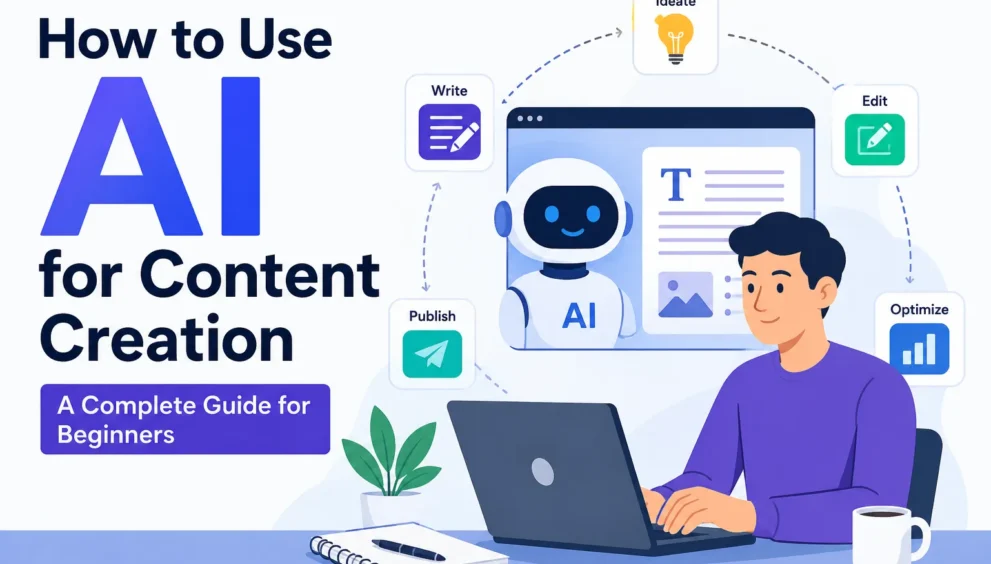
Content creation has changed a lot in recent years. Businesses, bloggers, marketers, and creators now use artificial intelligence (AI) to make content faster and more efficiently. AI tools can help with writing, editing, research, content planning, image generation, and much more.
Learning How to Use AI for Content Creation can save time while helping you create useful and engaging content. However, AI works best when it supports human creativity rather than replacing it. The most successful content creators use AI as a helpful assistant and add their own expertise, ideas, and experience.
In this guide, you will learn practical ways to use AI for content creation, the benefits of AI-powered content workflows, the best practices to follow, and common mistakes to avoid.
What Is AI Content Creation?
AI content creation refers to the use of artificial intelligence tools to assist with producing different types of content. These tools use machine learning and natural language processing to understand prompts and generate text, images, ideas, summaries, and more.
AI can help create:
- Blog posts
- Social media captions
- Product descriptions
- Email newsletters
- Website content
- Video scripts
- Marketing copy
- Content outlines
- Image concepts
Instead of starting from a blank page, creators can use AI-generated suggestions to speed up their workflow.
Why AI Is Becoming Popular for Content Creation
Many creators struggle with limited time, writer’s block, and increasing content demands. AI helps solve these challenges by assisting with repetitive and time-consuming tasks.
Some key reasons why AI is growing in popularity include:
Faster Content Production
AI can generate outlines, ideas, and draft content within seconds. This allows creators to focus more on strategy and creativity.
Improved Productivity
Content teams can complete more projects in less time by automating certain parts of the writing process.
Better Content Planning
AI tools can help identify trending topics, keyword opportunities, and content gaps.
Consistent Publishing
Regular publishing is important for audience growth. AI helps maintain a steady content schedule.
Support for Different Content Formats
AI can assist with articles, emails, social posts, scripts, and marketing materials from a single platform.
Understanding the Role of AI in Content Creation
Before learning How to Use AI for Content Creation, it is important to understand what AI can and cannot do.
AI is excellent at:
- Generating ideas
- Creating outlines
- Summarizing information
- Improving grammar
- Rewriting content
- Brainstorming headlines
- Producing first drafts
AI is not good at:
- Replacing real-life experience
- Providing original opinions
- Understanding complex emotions perfectly
- Guaranteeing factual accuracy
- Building trust without human input
The best results come from combining AI efficiency with human expertise.
Step 1: Use AI for Content Research
Research is often one of the most time-consuming parts of content creation. AI tools can speed up this process significantly.
AI can help you:
- Find content ideas
- Discover related topics
- Identify common audience questions
- Generate keyword suggestions
- Create topic clusters
For example, if you are writing about digital marketing, AI can suggest related topics such as:
- Email marketing
- SEO strategies
- Social media marketing
- Content marketing
- Marketing automation
This makes it easier to build a complete content plan.
Tips for AI-Assisted Research
- Verify facts from trusted sources
- Use AI for brainstorming, not final research
- Check statistics before publishing
- Compare information with reliable websites
Fact-checking remains essential even when using advanced AI tools.
Step 2: Generate Content Ideas
One of the biggest challenges creators face is coming up with fresh ideas consistently.
AI can generate hundreds of content ideas based on:
- Keywords
- Industry trends
- Audience interests
- Frequently asked questions
For example, a fitness blogger could ask AI for article ideas related to home workouts. The tool may suggest:
- Beginner home workout plans
- Home workout mistakes to avoid
- Best exercises without equipment
- Weekly workout schedules
- Home fitness tips for busy professionals
These suggestions can help fill your content calendar quickly.
Step 3: Create Detailed Content Outlines
A strong outline improves content quality and organization.
AI can generate structured outlines that include:
- Main headings
- Subheadings
- Key discussion points
- Frequently asked questions
- Suggested conclusions
Benefits of AI-generated outlines include:
- Better content flow
- Faster writing
- Improved readability
- Reduced writer’s block
Many professional writers use AI primarily for outlining because it provides a strong starting structure.
Step 4: Write the First Draft
One of the most common ways people learn How to Use AI for Content Creation is by generating first drafts.
Instead of writing from scratch, AI can produce an initial version that you can edit and improve.
When generating drafts:
- Provide clear instructions
- Define the audience
- Specify the tone
- Mention the desired format
- Include important points
For example:
“Write a beginner-friendly article about social media marketing using simple English.”
The more detailed the prompt, the better the output.
Why First Drafts Save Time
Writing often takes the longest part of content creation. AI helps by:
- Reducing blank-page anxiety
- Creating structure quickly
- Suggesting transitions
- Generating supporting content
Writers can then focus on refining the content rather than starting from zero.
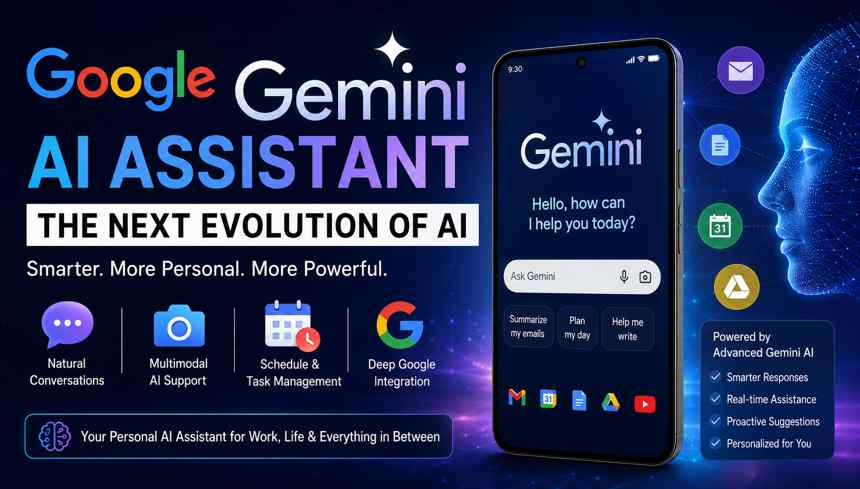
Instead of writing from scratch, AI can produce an initial version that you can edit and improve. Different AI tools may generate content in different styles and formats. Popular platforms such as ChatGPT, Claude, and Gemini each have unique strengths for writing, research, and content planning. If you are evaluating which AI assistant best suits your workflow, you can explore our detailed Claude vs. ChatGPT comparison and learn more about the Google Gemini AI Assistant.
Step 5: Improve Content Quality with AI Editing
AI is not only useful for writing. It is also valuable for editing.
Editing tools can help identify:
- Grammar mistakes
- Spelling errors
- Repetitive phrases
- Awkward sentences
- Readability issues
After completing a draft, run it through an AI editor to improve clarity.
However, always review suggested changes manually. Human judgment remains important for maintaining your voice and style.
Step 6: Use AI for SEO Optimization
Search engine optimization helps content rank higher in search results.
AI-powered SEO tools can assist with:
- Keyword research
- Search intent analysis
- Topic clustering
- Meta descriptions
- Headline suggestions
- Internal linking ideas
When using AI for SEO:
Focus on Search Intent
Understand why users are searching for a topic.
Search intent usually falls into four categories:
- Informational
- Navigational
- Commercial
- Transactional
Creating content that matches intent often improves rankings.
Use Keywords Naturally
Avoid stuffing keywords into every paragraph.
Instead:
- Use primary keywords naturally
- Include related terms
- Focus on reader experience
- Write helpful content
Search engines increasingly prioritize usefulness over keyword repetition.
Step 7: Create Social Media Content
AI can make social media content creation much easier.
You can use AI to generate:
- Instagram captions
- Facebook posts
- LinkedIn updates
- X posts
- YouTube descriptions
- Hashtag suggestions
For example, after publishing a blog post, AI can transform the article into multiple social media posts.
This process helps maximize content reach while saving time.
Repurposing Content with AI
Content repurposing is one of the smartest uses of AI.
A single blog post can become:
- Social posts
- Email newsletters
- Video scripts
- Infographics
- Short-form content
Repurposing allows creators to reach audiences across multiple platforms.
Step 8: Use AI for Email Marketing Content
Email remains one of the most effective marketing channels.
AI can assist with:
- Subject lines
- Newsletter content
- Product announcements
- Promotional emails
- Welcome sequences
Benefits include:
- Faster email creation
- More subject line options
- Improved consistency
- Better content organization
Always personalize emails to make them feel authentic and human.
Step 9: Create Better Headlines
Headlines often determine whether people click on your content.
AI can generate multiple headline options within seconds.
A good headline should be:
- Clear
- Relevant
- Easy to understand
- Interesting
- Benefit-focused
Instead of accepting the first suggestion, compare several options and choose the strongest one.
Step 10: Use AI for Image Ideas and Visual Content
Visual content plays an important role in engagement.
AI can help generate:
- Image concepts
- Infographic ideas
- Thumbnail designs
- Social graphics
- Presentation visuals
Content creators can use AI-generated suggestions to speed up design planning.
Visual content often improves:
- User engagement
- Social shares
- Time on page
- Content understanding
However, ensure visuals remain accurate and relevant to your topic.
Step 11: Create Video Scripts with AI
Video content continues to grow across platforms.
AI can help create scripts for:
- YouTube videos
- Educational content
- Product demonstrations
- Tutorials
- Marketing videos
A script generated by AI can provide a foundation that creators customize further.
This saves significant planning time while keeping content organized.
Step 12: Personalize Content with Human Insights
One of the most important lessons when learning How to Use AI for Content Creation is understanding that AI should not be the final author. Readers connect with real experiences, stories, and opinions.
After AI generates a draft, improve it by adding:
- Personal experiences
- Real examples
- Case studies
- Expert insights
- Industry knowledge
For example, if you run a business blog, include lessons you learned from real projects. This makes content more trustworthy and useful.
Human input helps content stand out from thousands of similar AI-generated articles online.
Best Practices for Using AI in Content Creation
AI can be extremely helpful, but following best practices ensures better results.
Start with Clear Prompts
AI performs better when instructions are detailed.
Instead of saying:
“Write about marketing.”
Try:
“Write a beginner-friendly article about email marketing for small business owners.”
Specific prompts produce more accurate and useful results.
Edit Every Draft
Never publish AI-generated content without reviewing it.
Always check:
- Accuracy
- Readability
- Tone
- Grammar
- Relevance
Editing improves quality and reduces errors.
Fact-Check Information
AI can sometimes generate inaccurate information.
Before publishing:
- Verify statistics
- Check dates
- Confirm facts
- Review sources
This is especially important for health, finance, legal, and technology content.
Maintain Your Brand Voice
Every brand has a unique style.
Use AI as a helper, but make sure your content reflects:
- Your personality
- Your values
- Your audience preferences
- Your communication style
Consistency builds trust with readers.
Focus on Helping Readers
The primary goal of content should always be helping people.
Ask yourself:
- Does this answer the reader’s question?
- Is the information useful?
- Is it easy to understand?
- Does it solve a problem?
Useful content performs better in search engines and keeps readers engaged.
Common Mistakes to Avoid
Many beginners make mistakes when using AI for content production.
Understanding these mistakes can help you create better content.
Publishing Without Editing
This is one of the biggest errors.
AI-generated drafts often require:
- Corrections
- Additional context
- Better examples
- Improved flow
Always review content before publishing.
Overusing AI
AI should support creativity, not replace it.
Content that relies entirely on automation can feel generic and repetitive.
Balance AI assistance with human creativity.
Ignoring Audience Needs
Some creators focus too much on generating content quickly.
Instead, focus on:
- Reader questions
- User intent
- Practical solutions
- Clear explanations
Audience-focused content usually performs better.
Using Unverified Information
Never assume AI-generated facts are always correct.
Check important details carefully before publishing.
Keyword Stuffing
Some people add keywords excessively in hopes of improving rankings.
Modern SEO focuses on:
- Quality
- Relevance
- User experience
Use keywords naturally and prioritize readability.
Benefits of AI for Content Creators
There are many reasons why creators continue adopting AI tools.
Saves Time
AI can complete tasks in minutes that might otherwise take hours.
Reduces Writer’s Block
AI can generate ideas and outlines when inspiration is low.
Increases Productivity
Teams can create more content without sacrificing quality.
Supports Content Scaling
Businesses can publish content more consistently.
Improves Workflow Efficiency
AI helps streamline research, drafting, editing, and planning.
Encourages Creativity
Contrary to popular belief, AI can support creativity by providing fresh ideas and perspectives.
Challenges of Using AI for Content Creation
While AI offers many benefits, it also has limitations.
Lack of Human Experience
AI cannot replace personal stories or real-world expertise.
Potential Inaccuracies
Some generated information may be outdated or incorrect.
Generic Content Risk
Without editing, content may sound similar to other AI-generated articles.
Limited Emotional Understanding
AI can imitate emotional language but may not fully understand human experiences.
Dependence on Prompts
Output quality often depends on the quality of the prompt provided.
Understanding these limitations helps creators use AI more effectively.
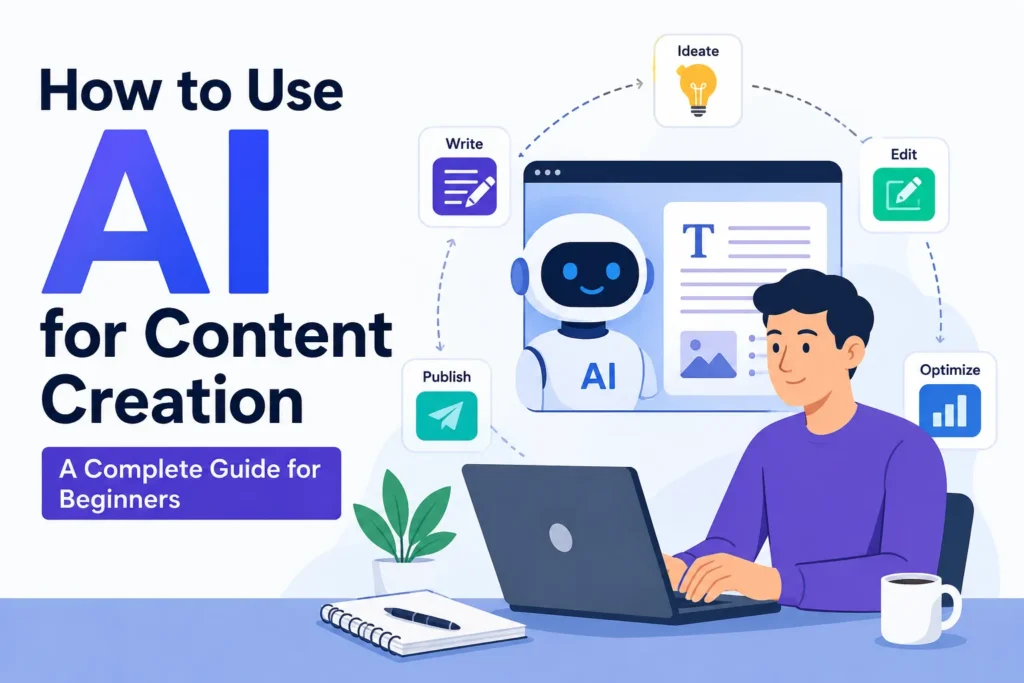
AI Content Creation Workflow Example
A simple workflow can help you integrate AI into your content strategy.
Step 1: Research
Use AI to identify topics, questions, and keywords.
Step 2: Planning
Generate content ideas and create an outline.
Step 3: Drafting
Create a first draft using AI assistance.
Step 4: Editing
Review and improve content manually.
Step 5: SEO Optimization
Add relevant keywords, headings, and metadata.
Step 6: Repurposing
Turn the article into social media posts, emails, and other formats.
Step 7: Publishing
Perform a final quality check before publishing.
This workflow combines automation with human oversight for better results.
How Different Industries Use AI for Content Creation
AI is now used across many industries.
Blogging
Bloggers use AI for:
- Topic ideas
- Outlines
- Drafts
- SEO assistance
E-Commerce
Online stores use AI for:
- Product descriptions
- Email campaigns
- Marketing copy
Education
Educators use AI for:
- Study materials
- Learning guides
- Lesson summaries
Digital Marketing
Marketers use AI for:
- Campaign planning
- Social media content
- Landing page copy
Media and Publishing
Publishers use AI for:
- Content research
- Editing support
- Content organization
The flexibility of AI makes it useful across many content formats and industries.
Ethical Use of AI in Content Creation
Responsible use of AI is important.
Creators should follow ethical practices such as:
- Being transparent when necessary
- Fact-checking information
- Respecting copyright laws
- Avoiding misinformation
- Prioritizing user value
The goal should be creating accurate and helpful content rather than producing large amounts of low-quality material.
Trust is one of the most valuable assets any creator can build.
Future of AI Content Creation
AI technology continues to evolve.
Future improvements may include:
- Better language understanding
- Improved personalization
- More advanced content recommendations
- Stronger collaboration tools
- Enhanced multimedia content generation
However, human creativity will remain essential.
People connect with authentic stories, experiences, and expertise. AI can assist the process, but human insight will continue to play a major role in successful content creation.
Conclusion
Learning How to Use AI for Content Creation can help creators work faster, stay organized, and produce content more consistently. AI is valuable for research, brainstorming, outlining, drafting, editing, SEO support, social media content, and content repurposing.
However, the best results come from combining AI efficiency with human creativity. AI can generate ideas and speed up workflows, but people provide the experience, expertise, and authenticity that readers trust.
As AI tools continue to improve, content creators who learn to use them wisely will gain a strong advantage. Focus on creating accurate, helpful, and reader-focused content while using AI as a supportive tool. By balancing automation with human insight, you can build a content creation process that is both efficient and effective.
Frequently Asked Questions
Can AI completely replace human writers?
No. AI can assist with research, drafting, and editing, but human creativity, expertise, and judgment are still necessary for high-quality content.
Is AI-generated content good for SEO?
AI-generated content can support SEO when it is accurate, useful, edited by humans, and aligned with user intent.
What types of content can AI create?
AI can help create blog posts, social media content, emails, product descriptions, video scripts, outlines, and marketing copy.
Do I need technical skills to use AI tools?
Most modern AI tools are designed for beginners and require little technical knowledge.
How can I improve AI-generated content?
Add personal experiences, verify facts, improve readability, and edit the content to match your brand voice.


How AI Is Changing the Future of Work
01st Jul 2026[…] How to Use AI For Content Creation […]
Apple iPhone Duo at $1,999: Features & Latest Details
10th Sep 2026[…] Also Read: How to Use AI for Content Creation […]
Apple iPhone Duo at $1,999: Features & Latest Details
14th Sep 2026[…] How to Use AI For Content Creation […]