
Vitamin C in Everyday Nutrition: Food Sources, Benefits
Sep 22, 2026





































































Vitamin C in Everyday Nutrition: Food Sources, Benefits and Dietary Importance

Ask most people what vitamin C does and you’ll get “oranges” and “colds.” That’s about it. Which is a shame,
because the real story is quieter than the cold-fighting myth everyone grew up on, and honestly more useful.
Your body can’t make vitamin C on its own. Doesn’t store it either. So food must keep supplying it, pretty much
daily. This piece walks through where it comes from, what it does, how much you need, and the part that gets
skipped most why the number on a nutrition label rarely survives the trip through your kitchen.
What Is Vitamin C, Exactly?
Ascorbic acid. That’s the chemistry-textbook name, if you’re curious. It dissolves in water, which means your
kidneys just flush out the surplus each day nothing gets banked for later. Had a big glass of orange juice on
Monday? Doesn’t buy you anything by Thursday. That’s not how it works.
It turns up across a wide spread of fruit and veg, though the amounts jump around a lot between them. And it’s
genuinely fragile more than people expect. Light does damage. So does heat, air, time spent sitting on a counter. All
of it eats into the total, bit by bit.
Why It Actually Matters
A handful of reasons here, not all equally famous.
Collagen formation tops the list the scaffolding behind skin, blood vessels, cartilage, bone. Without enough vitamin
C around, that process starts to falter, and severe long-term shortage shows up in skin and gums before anywhere
else.
It supports normal immune function too. Not a switch you flip. More like one component among several that
immune cells lean on to do their job.
There’s also its antioxidant work cleaning up free radicals thrown off by ordinary metabolism, or by smoking and
pollution. It helps the body absorb iron, which comes up again below. And it backs tissue repair wound healing,
connective tissue upkeep, the unglamorous maintenance nobody notices until it stops happening.
None of this makes it medicine. A glass of nimbus panic won’t knock out a cold. It’s a nutrient the body depends on
not a cure wearing a juice costume.
Where to Actually Get It
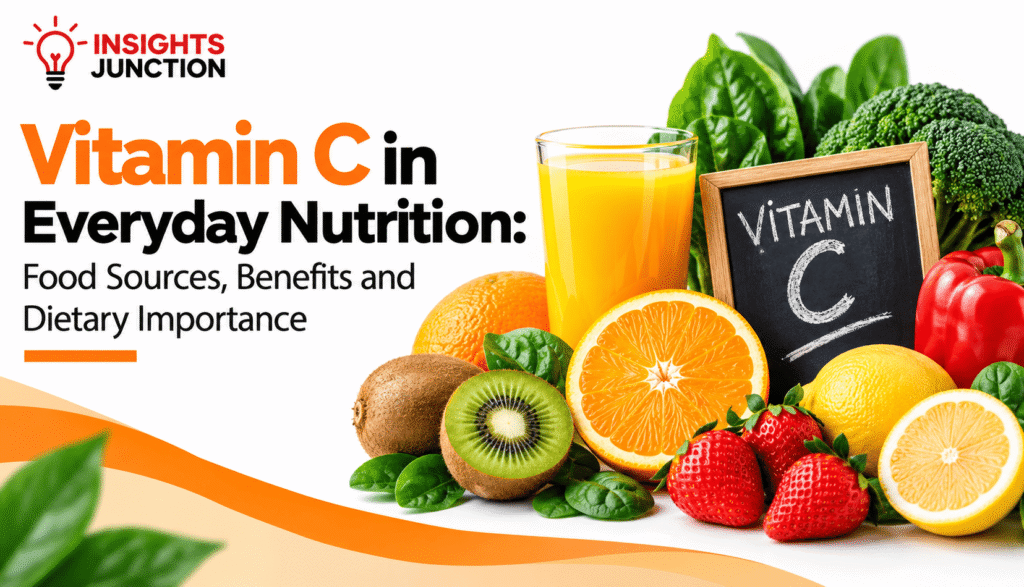
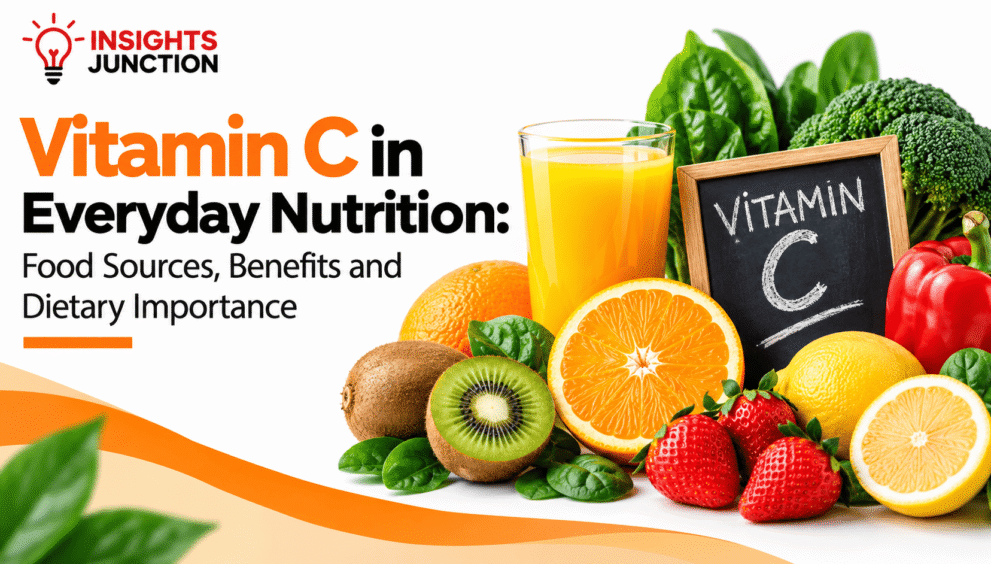
Citrus takes all the credit. Oranges, lemons, moambe sure, fine, they’ve got vitamin C.
But guava usually beats them, gram for gram, by a fair margin. That surprises people every time. Kiwi holds its own
too. Strawberries pull some weight, though you’d want a decent bowlful given how small one serving is. Bell
peppers red ones especially are strangely underrated; eaten raw, they can out-do a citrus fruit without much trouble.
Broccoli carries a solid amount, so long as it hasn’t been boiled into grey mush. Tomatoes give less per bite but add
up across a salad bowl or a pot of curry.
Then there’s amla. Indian gooseberry. Small, sour, and by most accounts one of the richest sources around fresh,
dried, or worked into marabi, a little does a lot.
A few things worth keeping in mind:
- variety changes the numbers, not every lemon is the same lemon
- how long produce has been sitting matters more than people think
- cooking method reshuffles everything its own topic, coming up
So How Much Do You Actually Need?
Roughly 90 mg a day if you’re a man, 75 mg if you’re a woman those are the figures most dietary guidelines land on.
Smokers usually need an extra 35 mg or so, since the habit eats into the body’s supply faster than normal. Different
countries phrase their guidelines slightly differently, and no two bodies need the exact same amount anyway, so treat
these as a reasonable ballpark rather than gospel.
There’s a mix-up worth clearing up here. Eating vitamin C through food and taking it as a supplement aren’t really
the same topic. Supplement doses can run far higher hundreds of milligrams, sometimes into the thousands. Most
guidance points to an upper limit somewhere around 2,000 mg a day, counting everything you take in. Go past that
regularly and you’re not gaining anything, possibly the opposite. And if you’re eyeing a high-dose supplement for a
particular reason, that decision belongs with a doctor, not a nutrition write-up.
What Wrecks Vitamin C Before It Reaches You
Time is the quiet thief here produce loses some of its vitamin C the longer it sits, room temperature especially.
Heat does more damage, though. Boil vegetables in a big pot for a long stretch and you’ll pull a real chunk of it out,
partly from the heat itself, partly because the vitamin leaches straight into the cooking water. A quick steam, or a
fast stir-fry, keeps far more intact. Processing takes its toll as well; canned produce typically has less on offer than
fresh does. Even slicing a fruit open and leaving it exposed speeds the loss along, since oxygen is basically the
enemy in this whole equation.
Freshness at the point of purchase counts for more than people usually credit. A guava that spent three days getting
to your local sabzi mandi isn’t nutritionally the same fruit as one picked that same morning. None of this makes
cooked vegetables pointless it just means raw or barely cooked versions hold onto more.
The Iron Connection
This part is genuinely practical, not just trivia. Vitamin C boosts absorption of non-home iron the kind found in dal,
spinach, lentils, plant sources broadly as distinct from the home iron in meat and fish.
A squeeze of lemon over dal. A bit of amla alongside an iron-heavy meal. Small habit, real payoff, particularly for
anyone leaning on plant-based iron rather than meat.
Vitamin C as an Industry, Not Just a Nutrient
Step outside the kitchen and vitamin C is also a manufactured, globally traded commodity — used in food
preservation, fortification, supplements, and a stack of industrial applications most people never think about. Like
any traded raw material, its cost shifts. Raw material availability, energy costs baked into production, manufacturing
conditions, shipping bottlenecks, seasonal demand spikes, regional market swings — any one of these can nudge
prices in either direction without much warning. Anyone tracking Vitamin C Price Trend data over recent years has
likely noticed how exposed the market is to supply chain hiccups or disruption in production regions. Odd to think
something this ordinary sits inside a commercial system that volatile.
Getting More of It into Daily Life
Nothing elaborates required:
- squeeze of lemon into dal, salad, or a glass of water
- keep fruit visible guava, kiwi, orange not buried at the back of the fridge
- raw bell pepper strips tossed into a stir-fry right at the end
- amla in small doses, fresh or pickled
- skip the long boil where possible; a quick steam does better
These aren’t a meal plan. They’re just habits that stick if you keep repeating them.
Can Food Alone Cover It?
For most people eating a reasonably varied diet, yes. Regular fruit and vegetables in the rotation usually means
you’re covered without a supplement bottle anywhere in sight.
Some people carry more risk, though very limited produce intake, restrictive eating patterns, heavy smokers, anyone
recovering from illness or surgery where needs climb higher than usual. Worth raising with a doctor or dietitian in
those cases rather than guessing.
When Deficiency Becomes an Actual Concern
A short, mild dip usually isn’t a crisis. Prolonged, severe shortage is a different matter scurvy, in the old terminology
and it brings fatigue, gum trouble, slow-healing wounds, joint pain. Rare where fresh produce is easy to reach, but
not extinct. It still shows up: highly restrictive diets, certain medical conditions, diets built almost entirely around
processed food.
If fatigue drags on, gums start bleeding, or a wound just refuses to close properly, that’s a doctor’s job to look at. Not
something to self-diagnose over a cup of chai and a search engine.
Also Read: Yoga for Women’s Health
Frequently Asked Questions
Does cooking wipe out all the vitamin C?
Nope but it does take a decent chunk out, particularly with long boiling. If you can, steam instead.
Is guava genuinely higher in vitamin C than orange?
Usually, and often by a wide margin though exact numbers shift with variety and ripeness.
Can supplements just replace vitamin C foods?
In a pinch, sure. But you lose the fibre and extra nutrients that come bundled with whole food. Better to treat food as
the default and save supplements for situations and loop in a doctor if you’re going that route.
Will vitamin C actually prevent a cold?
Not according to the evidence available. It might trim a day or so off how long one lasts for some people. Stopping
it from happening in the first place? No.
What counts as too much vitamin C?
Once you’re past roughly 2,000 mg a day from every source combined, stomach upset starts becoming a real
possibility. Most people eating normally never get anywhere close.
Is amla worth eating daily?
Yes even a small serving counts for a lot, given how concentrated it is.
Do smokers really need extra?
Generally, yes. About 35 mg more per day is the usual guidance, since smoking speeds up how quickly the body
uses it.