


Microsoft Surface Laptop Ultra: Price, Specifications, Features, Release
Oct 08, 2026




























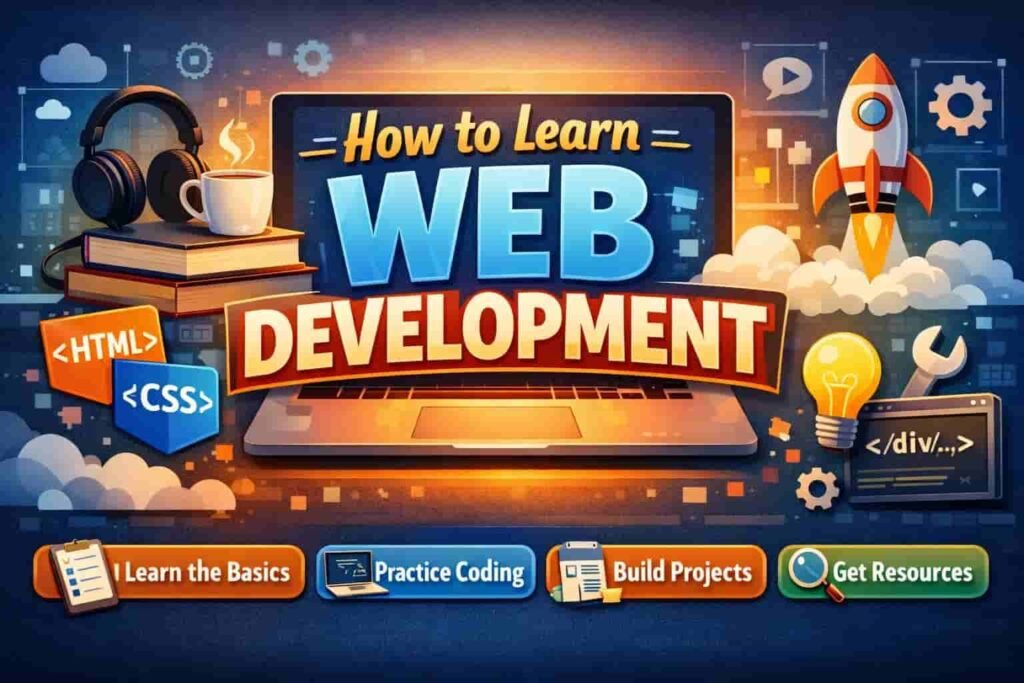


































How to Learn Web Development in 2026 : Beginner Roadmap

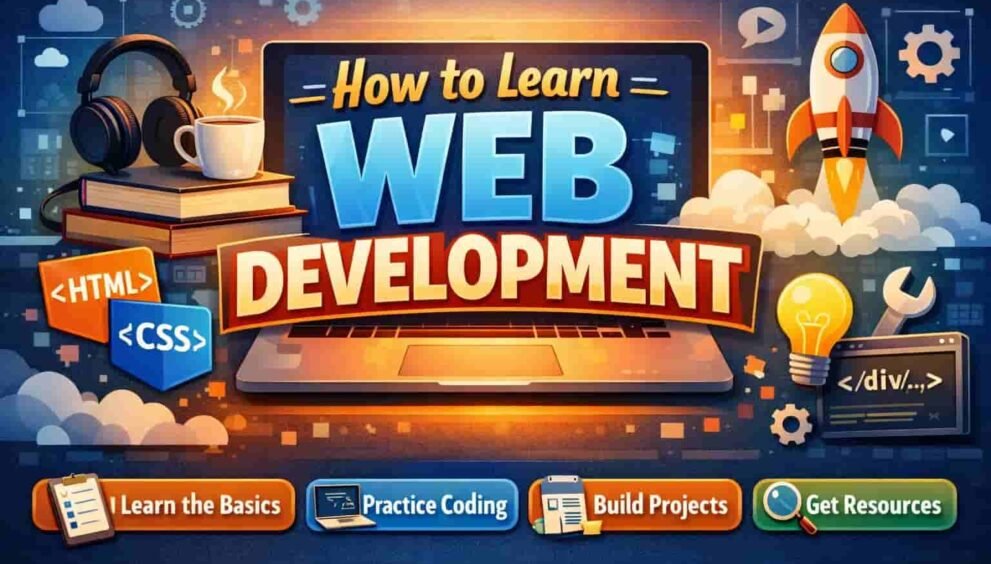
Every year, thousands of people decide to learn web development. They open YouTube, search for tutorials, and within twenty minutes they face a list that includes HTML, CSS, JavaScript, React, Node.js, Python, databases, Git, deployment, and at least three frameworks they have never heard of. Nobody ranks the list. Nobody explains what comes first. Most guides simply assume you already know where to begin.
That is the actual problem, not the difficulty of the subject, but the lack of a clear starting point. To help you with this guide covers the entire path in sequence, from the very first concept to a job-ready skill set
What is Web Development ?
Web development refers to building websites and web applications that run in a browser. It encompasses everything from a simple personal portfolio to a complex platform like an online banking system or an e-commerce marketplace. If it is on the web and people are using it, a web developer created it.
There are three different areas of web development:
Frontend Development:
refers to everything a user sees and interacts with on screen, the layout, typography, buttons, navigation, and animations. Frontend developers are responsible for the visual and interactive layer of a website.
Backend Development:
refers to the server-side logic that powers a website’s functionality. When a user logs in, submits a form, or makes a purchase, the backend processes that action, communicates with a database, and returns the appropriate response.
Full Stack Development:
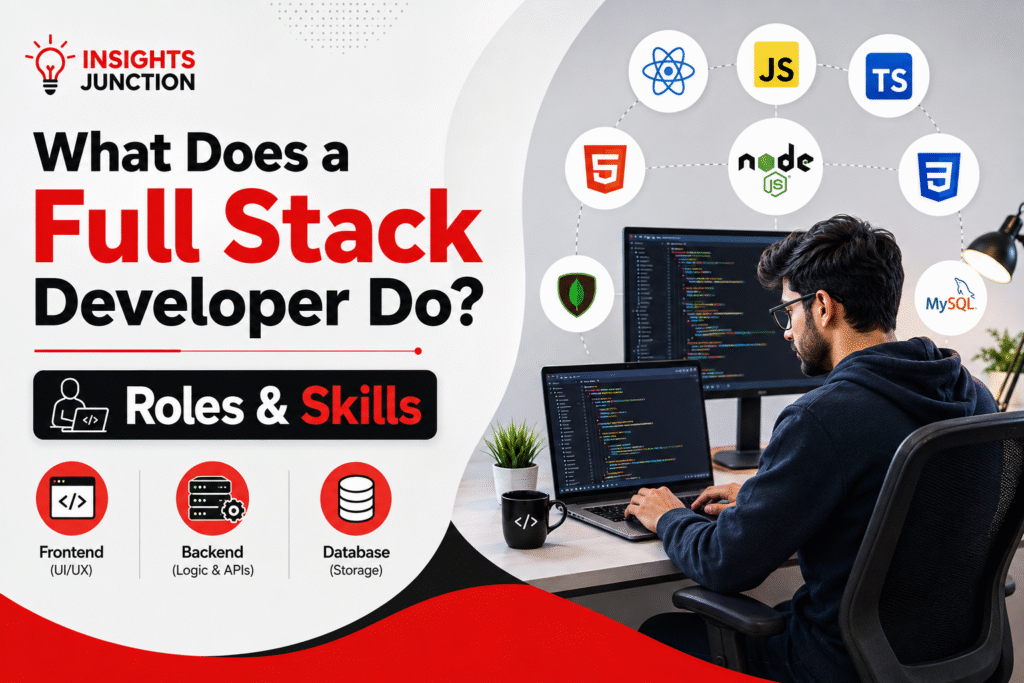
combines both disciplines. A full stack developer can design the user interface, write the server logic, manage the database, and deploy the final product, making them one of the most versatile and sought-after profiles in the industry
As of 2026, there are roughly 11.5 million frontend developers, 10 million backend developers, and 7.2 million full stack developers. All three have excellent job prospects, and it is up to you to decide which one you want to pursue based on your interests and skills.
Step 1 – Master the Core Frontend Technologies
No matter which way you end up specializing, all web developers start out with the same three technologies. These are the building blocks of everything that gets created on the web.
HTML – The Structure of a Webpage
HTML, or HyperText Markup Language, defines the structure and content of a webpage. It tells the browser what to display – headings, paragraphs, images, links, and forms. HTML is not programming in the classical sense. It is the act of structuring content in such a way that browsers can properly interpret it.
Most beginners become comfortable with HTML within one to two weeks of consistent practice. The best way to learn it is to use it immediately. Build a simple page with your name, a short biography, and a few sections. That practice alone will teach you more than an hour of passive reading.
CSS – The Design and Layout
Cascading style sheets (CSS) are used to control the visual representation of a web page and design elements such as Colour, Font, Spacing, Position, Overall Layout, and how a page adapts to the Various Sizes of Different Devices. An appropriately formed CSS file is what separates a raw/unformatted web page from a finished and polished, professional-looking Product!
Responsive design is now a baseline requirement, not just an added feature to ensure any website works properly on all mobile devices, tablets, and desktops alike. 86% of all websites were using Responsive Design in 2026, while 73% of all websites were Mobile Optimized.
If you are just starting in web development, you should place special emphasis on learning CSS Flexbox & CSS Grid as this will allow you to complete the majority of your modern layout tasks. Plan to devote 2-4 weeks to CSS. You should Focus on understanding the Box Model, positioning & responsive breakpoints before you proceed.
JavaScript – The Behaviour and Interactivity
JavaScript is the programming language of the web. It is what makes pages interactive and dynamic, dropdown menus, real-time form validation, content that updates without a page reload, and much more. Unlike HTML and CSS, JavaScript is a full programming language, and learning it introduces you to the logic and problem-solving that define software development.
JavaScript is also the most widely used programming language in the world. 62.3% of all developers use JavaScript as of 2026, and it has topped the Stack Overflow Developer Survey for twelve years running. Its use is not limited to the web browser either – it is also used on servers, in mobile apps, and in desktop apps.
Plan to spend two to three months building a solid JavaScript foundation. The core concepts to focus on are variables, data types, functions, arrays, objects, loops, and DOM manipulation. Once these become second nature, everything that follows will be considerably easier to absorb.
Step 2 – Learn a Frontend Framework
After establishing a strong command of the core technologies, the next step is to learn a JavaScript framework. Frameworks provide developers with pre-built structures, components, and tools that dramatically reduce the time required to build complex user interfaces. The three most widely adopted frontend frameworks in 2026 are:
React.js – Developed and maintained by Meta, React is the dominant choice in the industry. 43% of developers cite React as their preferred frontend framework, and it leads the majority of job postings for frontend and full stack roles. For most beginners, React is the most practical starting point.
Vue.js – Vue is known for having a gentler learning curve than React, making it a strong option for developers who want a more structured introduction to component-based development. It is widely used in agency environments and smaller product teams.
Angular– A full-featured, comprehensive framework. It is maintained by Google. It is often used in enterprise applications and large-scale apps where consistency and organization are paramount.
In addition to your chosen framework, it is essential that you take the time to learn Git and GitHub. Version control is a skill that is not optional in any professional development environment.
It enables you to see what changes have been made, work with other developers, and keep a clean history of your own work, which is expected of you from day one in any development job.
Step 3 – Understand Backend Development
The frontend determines how a product looks and feels. The backend determines how it works. To build complete, functional web applications, a solid understanding of backend development is essential.
Server-Side Programming Languages
A backend language handles the logic that runs on the server – processing requests, applying business rules, and communicating with databases. The most widely used options are:
Node.js – JavaScript on the server side. Because it uses the same language as the frontend, Node.js is a natural progression for developers who are already comfortable with JavaScript. It currently leads all backend frameworks at 47.1% usage in 2026.
Python (with Django or Flask) – Python is valued for its readability and versatility. Django is a robust, full-featured framework suited to complex applications; Flask is lighter and more flexible, giving developers greater control over structure.
PHP – Despite being one of the older server-side languages, PHP remains widely used, particularly in content management systems. WordPress, which powers over 40% of all websites globally, is built on PHP.
Databases
All web apps involve storing and fetching data. Knowledge of databases and the basics of the two main types is a core skill of the backend.
Relational databases like MySQL and PostgreSQL are structured in tables with defined relationships between them. They are best suited to applications where data integrity is a concern.
Non-relational databases like MongoDB are structured in flexible documents, not rigid rows and columns. They are best suited to applications that involve large amounts of unstructured data.
Because of the size of the market, the potential earnings, and the ability to work remotely, the building blocks of web development are accessible to anyone who is willing to put in the time and effort. Start with one project, and place yourself in a rapidly expanding and highly paid field.
APIs and Authentication
A RESTful API is the standard method by which a frontend application communicates with a backend server. Learning how to design and consume APIs is central to backend development. Alongside this, knowledge of user authentication – how to securely authenticate logins using something like JWT or OAuth is a must for any application that manages user accounts.
Step 4 – Combine Both into Full Stack Development
When the skills of a frontend and backend developer are put together, the developer has the capability to develop a complete web application from scratch. This is the domain of full stack development, and this is where the requirement for full stack developers is currently the highest. As of early 2026, full stack and frontend jobs comprise the majority of job postings for developers in the United States, with approximately 65,000 full stack jobs currently active. On a year-over-year basis, job postings for full stack developers are up 35%.
The most popular combinations of full stack technologies are:
MERN Stack – MongoDB, Express.js, React, and Node.js. This combination uses JavaScript across the entire application, which simplifies development and is particularly beginner-friendly once JavaScript is well understood.
MEAN Stack – The same structure as MERN, with Angular replacing React on the frontend. Django + React – A Python-powered backend paired with a React frontend. This combination is common in data-intensive applications and companies that already use Python in their broader technology stack.
Full stack developers are also expected to understand how to deploy applications. Knowing cloud services like AWS, Vercel, or Netlify, and having a basic understanding of DevOps, will go a long way in adding to a developer’s skill set.
What is the Realistic Timeline for Beginners?
One of the most common questions from beginners is how long this will take. The honest answer is that it depends on consistency far more than it depends on raw hours. That said, a structured timeline gives most learners a useful frame of reference:
Months 1 to 3: HTML, CSS, and JavaScript fundamentals. By the end of this period, you should be able to build and style static websites independently.
Months 4 to 6: A JavaScript framework, Git and version control, and portfolio projects. You will be building functional, interactive interfaces.
Months 7 to 10: Backend development, databases, and API integration. You will be capable of building complete, data-driven web applications.
Months 10 to 12+: Full stack projects, deployment, and job preparation. By this stage, most disciplined learners are ready to apply for entry-level roles or take on freelance work.
Regular, daily practice is more effective than sporadic, intensive sessions. Thirty to sixty minutes of focused work each day compounds into real capability over time.
Learning Resources and Practical Guidance
The quality of your resources matters, but not as much as the consistency with which you use them. The following platforms are well-regarded and well-structured for beginners:
freeCodeCamp – A comprehensive, free curriculum covering HTML, CSS, JavaScript, and beyond. It includes hands-on projects at every stage and a certification system that adds substance to a portfolio.
The Odin Project – A project-based curriculum that emphasises building real things from the start. It is particularly effective for learners who prefer to understand the reasoning behind concepts rather than simply following instructions.
MDN Web Docs – The definitive reference for web technologies, maintained by Mozilla. It is not a course, but it is the most reliable source of documentation you will find on any frontend concept.
Beyond platforms, a few practical habits will significantly accelerate your progress:
1. Build projects continuously, even when they are small and imperfect. Applied practice teaches you things that tutorials cannot.
2. Publish your work on GitHub from the beginning. A visible commit history and a portfolio of real projects carry considerable weight with employers.
3. Read error messages carefully rather than reacting to them with frustration. Most errors contain precise information about what went wrong and where.
4. Engage with developer communities on platforms such as Stack Overflow, GitHub Discussions, and Discord. Learning in the presence of others is consistently more effective than learning in isolation.
Career Scope and Salary Outlook in 2026
The web development job market in 2026 is strong, though it is more competitive at the entry level than it was several years ago. Understanding the landscape clearly is more useful than either excessive optimism or unwarranted pessimism.
Median annual salaries in the United States offer a useful benchmark:
Web Developers (general): $90,930 per year, according to the U.S. Bureau of Labor Statistics.
Full Stack Developers: $119,000 to $127,900 per year on average, with senior roles in major technology markets reaching $162,500 or above.
Frontend Developers: Typically in the range of $85,000 to $115,000, depending on experience and location.
Telecommuting has greatly impacted the geographical limitations associated with this occupation. 58% of web developer jobs in 2026 are telecommuting or hybrid, which means that web developers have access to well-paying jobs regardless of their location to a big city. The career options available to web developers are:
Frontend Developer – Specialising in user interfaces, design systems, and client-side performance.
Backend Developer – Focused on server architecture, database management, and application logic.
Full Stack Developer – Working across both layers of an application; among the most versatile and commercially valuable profiles in the field.
Freelance Web Developer – Building an independent client base across industries. A viable path once a developer has a solid portfolio and a few completed projects to reference.
UI/UX Developer – Bridging design and development, with a focus on usability and user experience research.
One thing to keep in mind: entry-level jobs are competitive. On average, junior developer jobs in 2026 receive more than 50 applications per job posting. Having a portfolio of real projects that actually work will always beat having a list of courses completed. This is because employers want to see evidence of ability, not just completion.
Conclusion:
The web development market is projected to reach around 82 to 88 billion dollars in 2026, growing at roughly 8 to 9 percent each year. This expansion reflects rising demand for modern websites, e‑commerce platforms, and web applications across industries.
At the same time, web developer salaries in 2026 typically fall in the 70,000 to 95,000 dollar range globally, with mid‑level and senior roles often surpassing 100,000 dollars, especially in major tech hubs. Remote web development opportunities have also multiplied, with thousands of work‑from‑home roles available worldwide, including a strong presence in India. Start with HTML, CSS, and JavaScript, the core technologies every web developer needs to understand. Then move into a frontend framework, followed by backend development, and gradually build toward full‑stack competence.
Each skill you pick up makes the next one easier to learn. It is not the developers with the most time who will reach proficiency but those who work on it every day and continue to develop, even when they are not making progress. Start with one small project, learn in a structured manner, and put yourself in a position to enter a rapidly growing and lucrative field.


What Does a Full Stack Developer Do? Roles & Skills
25th Aug 2026[…] How to Learn Web Development in 2026 : […]