
27 Different Types of Sarees in India With
Mar 15, 2026






































27 Different Types of Sarees in India With Names

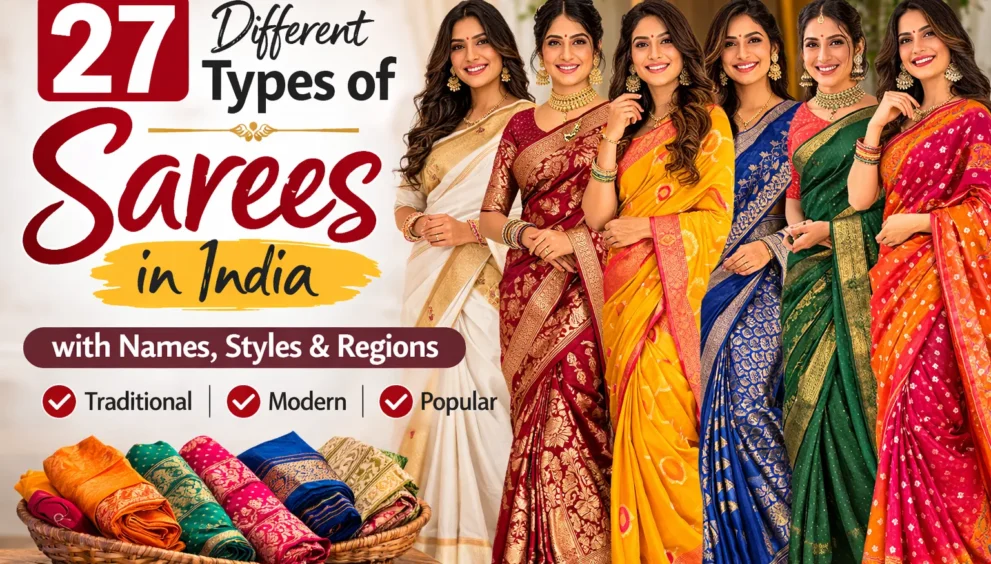
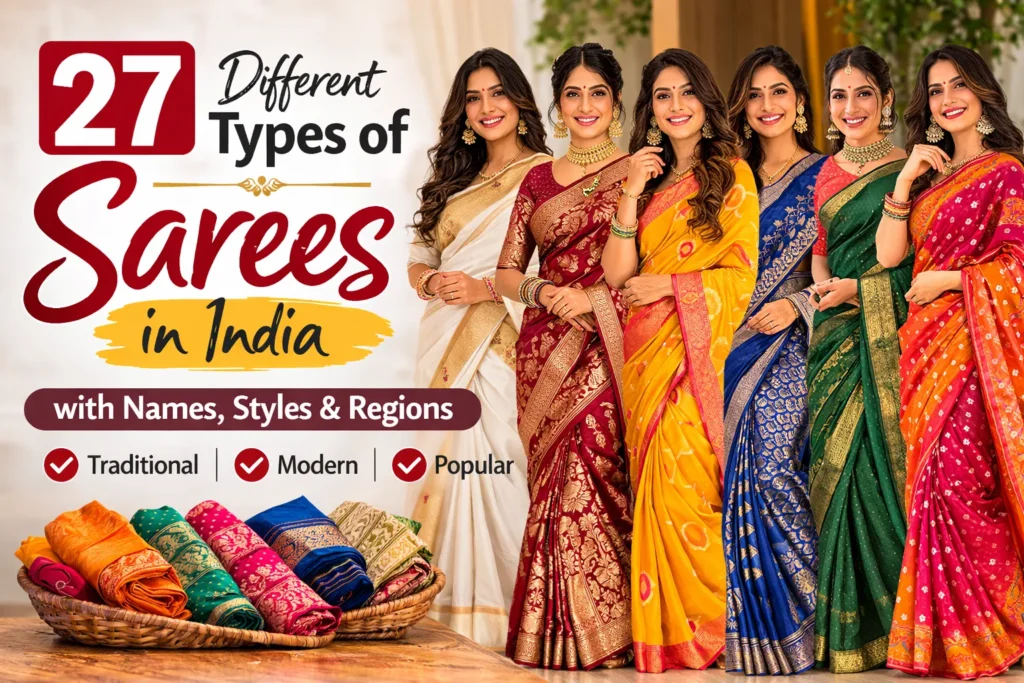
India is known for its rich cultural heritage, and the saree is one of the most iconic traditional outfits worn by women across the country. From luxurious silk sarees worn at weddings to lightweight cotton sarees perfect for daily wear, India offers an incredible variety of Saree Type Names that reflect regional traditions, craftsmanship, and cultural identity.
If you are searching for saree type names or want to explore the different types of sarees available across India, this guide will help you discover the most famous and traditional sarees from different states.
In this blog, we will explore 27 different types of sarees in India with names, their origin, fabric, and what makes each saree unique.
Why Sarees Are an Important Part of Indian Culture
The saree is more than just a garment; it represents India’s centuries-old textile tradition and artistry. Every region in India has its own weaving style, fabric, and design patterns that give sarees their distinct identity.
Some sarees are known for their luxurious silk and intricate zari work, while others are admired for their handloom craftsmanship and traditional motifs. This is why the types of sarees in India are incredibly diverse.
Today, sarees are worn for weddings, festivals, formal occasions, and even daily wear, making them one of the most versatile outfits in Indian fashion.
27 Different Types of Sarees in India
1. Banarasi Saree (Uttar Pradesh)
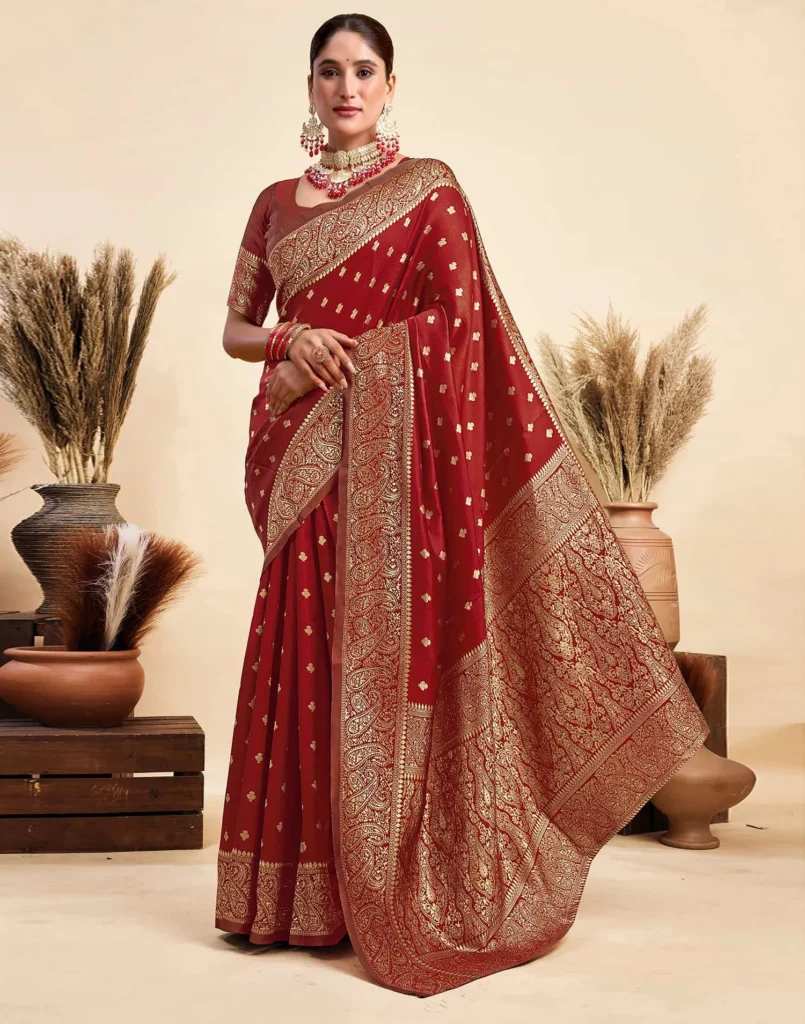
Banarasi sarees are among the most famous Indian saree types and are widely known for their luxurious silk fabric and intricate zari work. These sarees originate from Varanasi and are traditionally worn during weddings and grand celebrations. Banarasi sarees often feature Mughal-inspired motifs such as floral patterns, paisleys, and detailed brocade designs. Because of their rich craftsmanship and elegance, Banarasi sarees are considered one of the most popular sarees in India and are an essential part of many bridal trousseaus.
2. Kanjivaram Saree (Tamil Nadu)
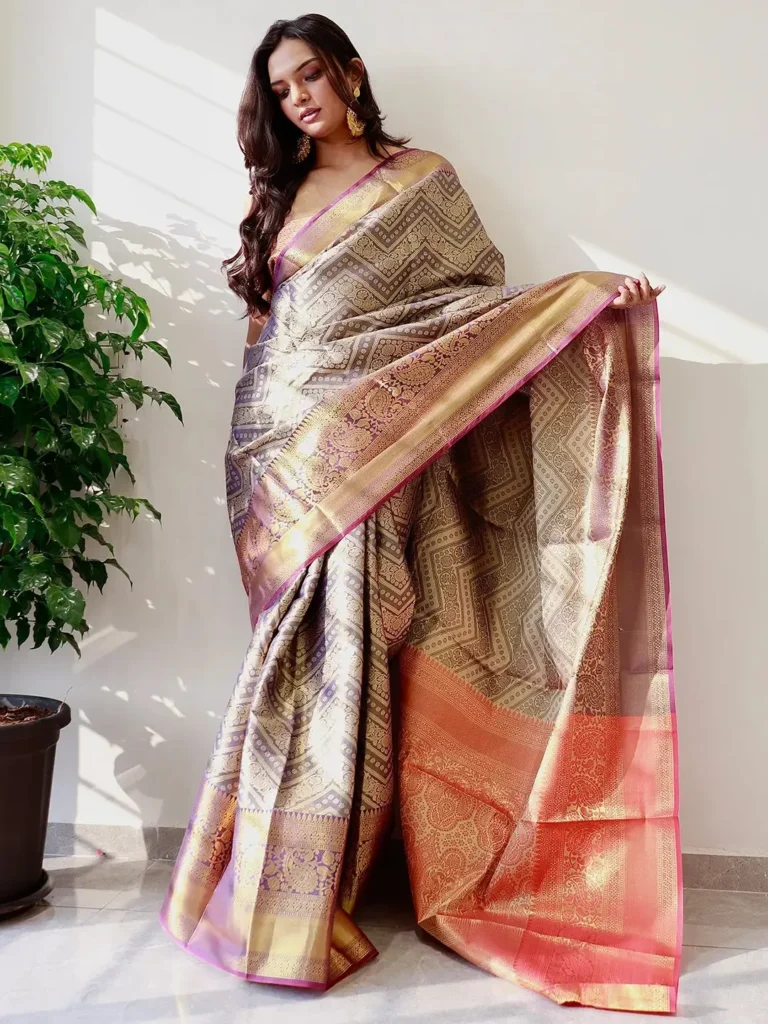
Kanjivaram sarees are one of the most luxurious silk sarees in India and are highly valued for their durability and vibrant colors. These sarees originate from Kanchipuram in Tamil Nadu and are made from pure mulberry silk threads. The borders and pallus are usually woven separately and then joined with the body, making them strong and long-lasting. Known for their rich gold zari work and temple-inspired patterns, Kanjivaram sarees are a popular choice for South Indian weddings.
3. Chanderi Saree (Madhya Pradesh)
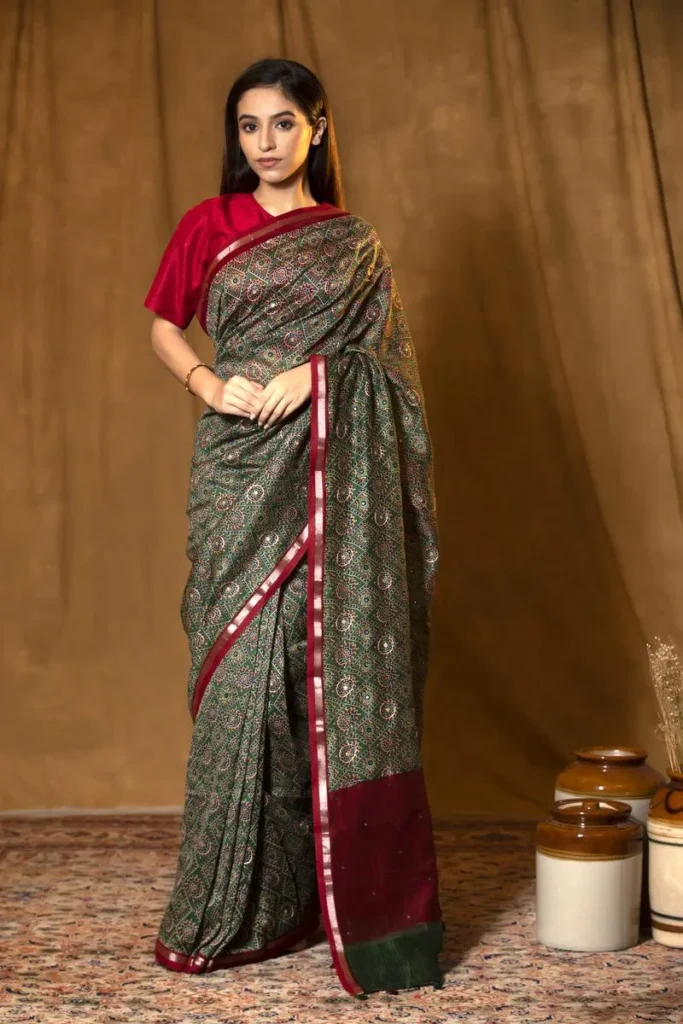
Chanderi sarees are lightweight and elegant sarees known for their glossy texture and delicate weaving. These sarees come from the historic town of Chanderi in Madhya Pradesh and are traditionally made using a blend of silk and cotton. The fabric is extremely breathable and comfortable, making it suitable for both festive and formal occasions. Chanderi sarees often feature traditional motifs like peacocks, flowers, and geometric patterns, giving them a sophisticated and graceful look.
4. Bandhani Saree (Gujarat & Rajasthan)
Bandhani sarees are famous for their colorful tie-dye technique, which involves tying small knots on the fabric before dyeing it. This ancient textile art is widely practiced in Gujarat and Rajasthan. The process creates beautiful dotted patterns across the saree, making each piece unique. Bandhani sarees are commonly worn during festivals, weddings, and cultural events. Their vibrant colors and traditional craftsmanship make them one of the most recognizable types of sarees in India.
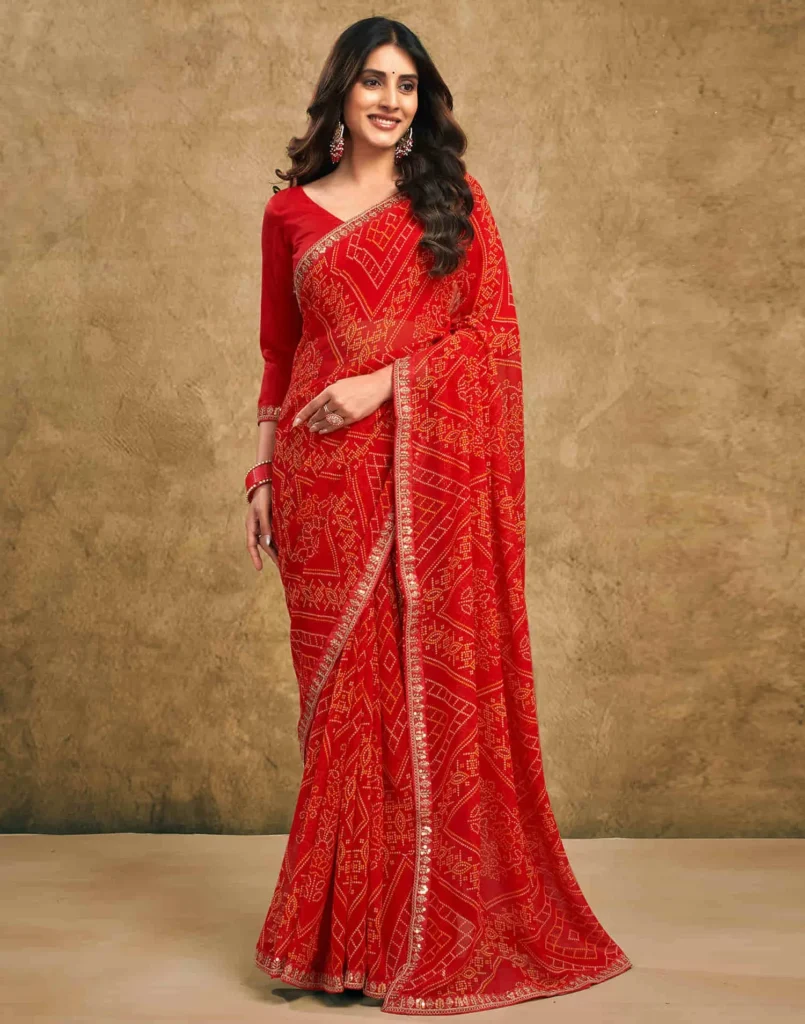
5. Paithani Saree (Maharashtra)
Paithani sarees are traditional silk sarees from Maharashtra and are considered a symbol of luxury and heritage. These sarees are known for their vibrant colors, pure silk fabric, and elaborate zari work. The pallu often features peacock or lotus motifs woven with gold threads. Paithani sarees are handwoven and require a great deal of skill and time to produce. Because of their royal appearance and cultural significance, they are often worn during weddings and special celebrations.
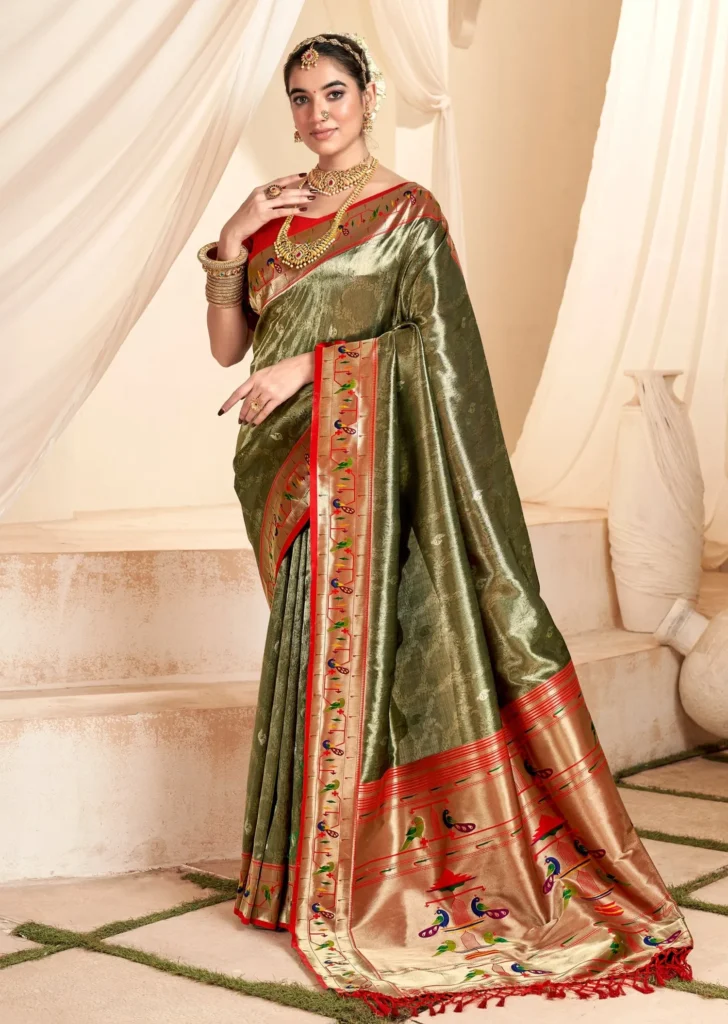
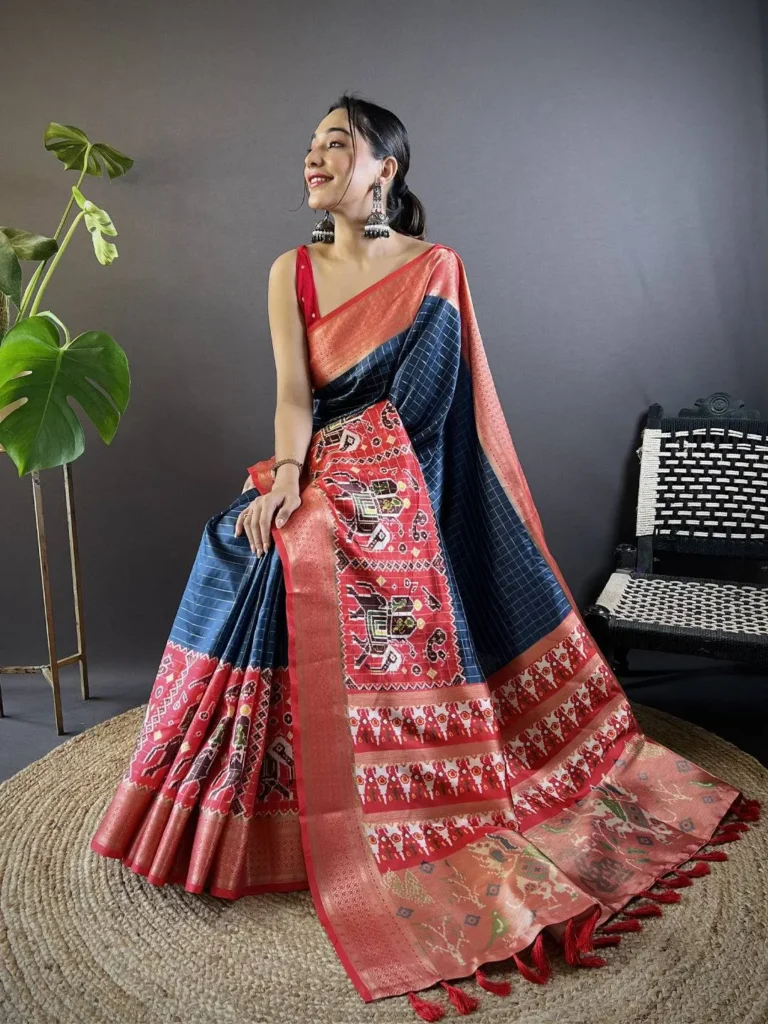
6. Patola Saree (Gujarat)
Patola sarees are among the most intricate handwoven sarees in India and are famous for their double ikat weaving technique. These sarees originate from Patan in Gujarat and require months of meticulous craftsmanship. The designs are dyed into both the warp and weft threads before weaving, creating symmetrical geometric patterns. Patola sarees are known for their bright colors, durability, and detailed designs, making them one of the most valuable and traditional sarees in India.
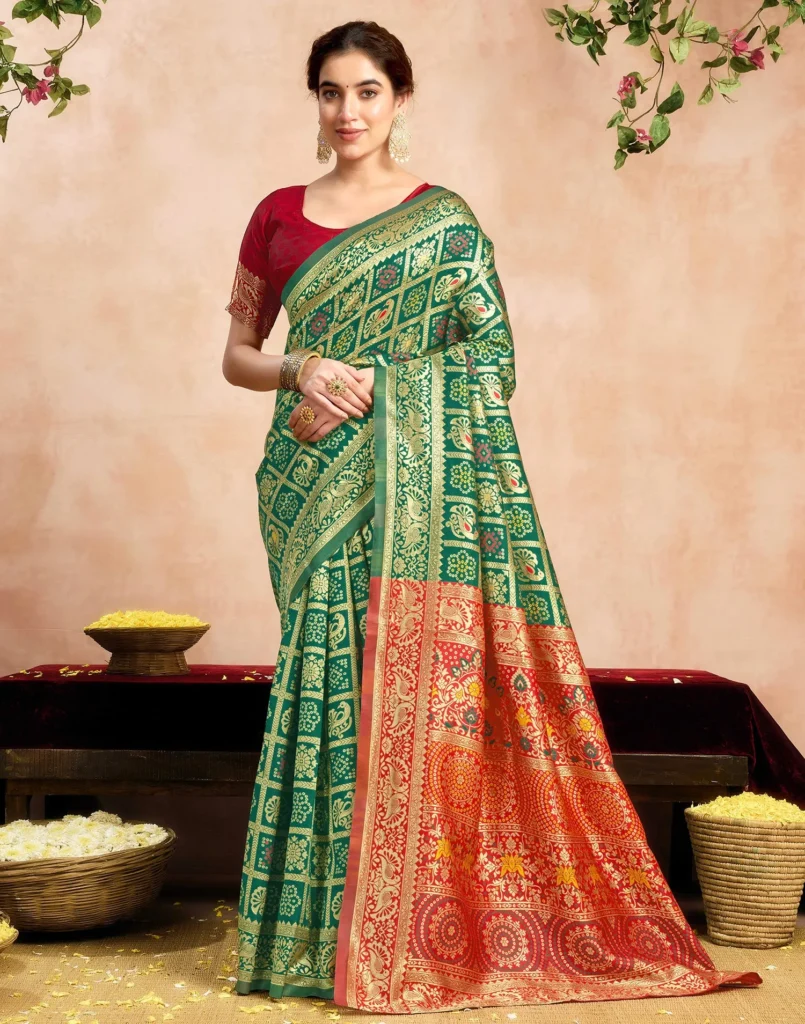
7. Sambalpuri Saree (Odisha)
Sambalpuri sarees are traditional handloom sarees from Odisha and are known for their unique tie-dye technique called “Bandha.” These sarees feature intricate patterns woven into the fabric rather than printed on it. Common motifs include flowers, animals, and traditional symbols that reflect the region’s culture. Sambalpuri sarees are appreciated for their craftsmanship, vibrant colors, and durability, making them one of the most admired Indian saree types.
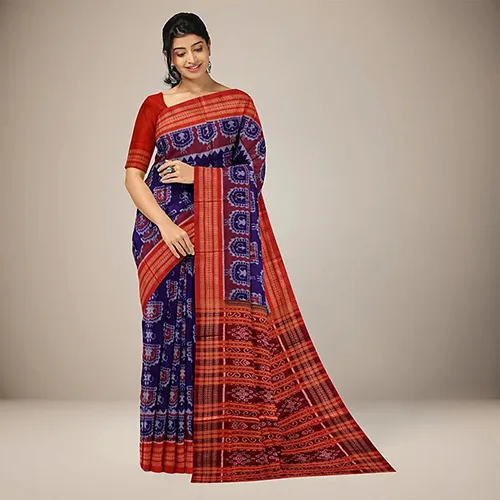
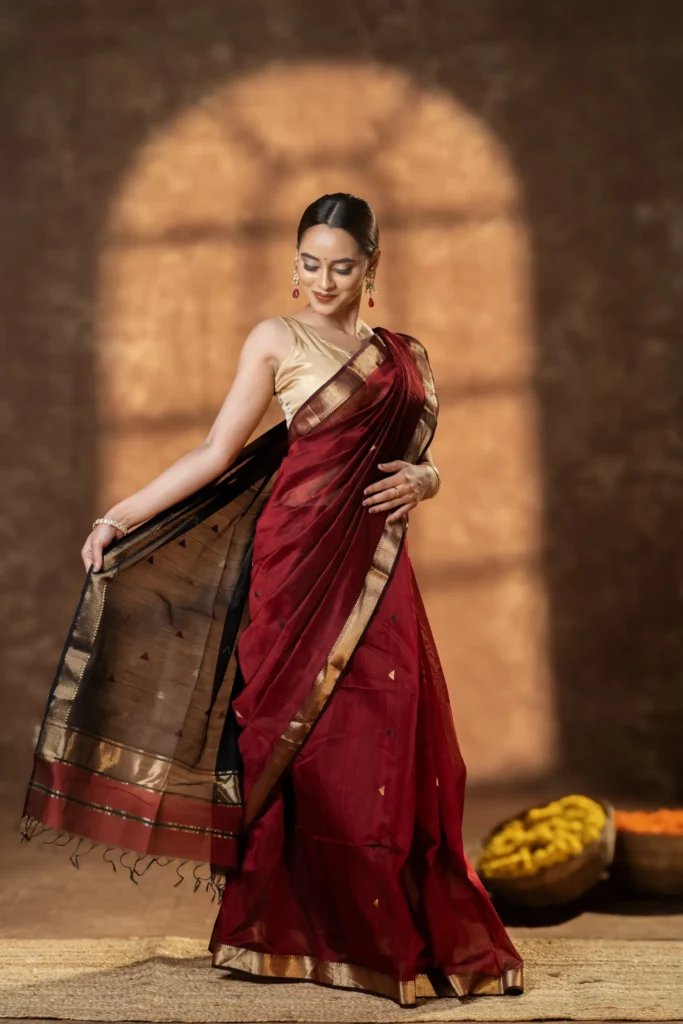
8. Mysore Silk Saree (Karnataka)
Mysore silk sarees are known for their soft texture, elegant design, and high-quality silk fabric. Produced in Karnataka, these sarees are made from pure silk and often feature simple yet sophisticated golden borders. Unlike heavily decorated sarees, Mysore silk sarees focus on minimalistic beauty and smooth finishing. They are commonly worn during festivals, formal events, and traditional ceremonies due to their refined and graceful appearance.
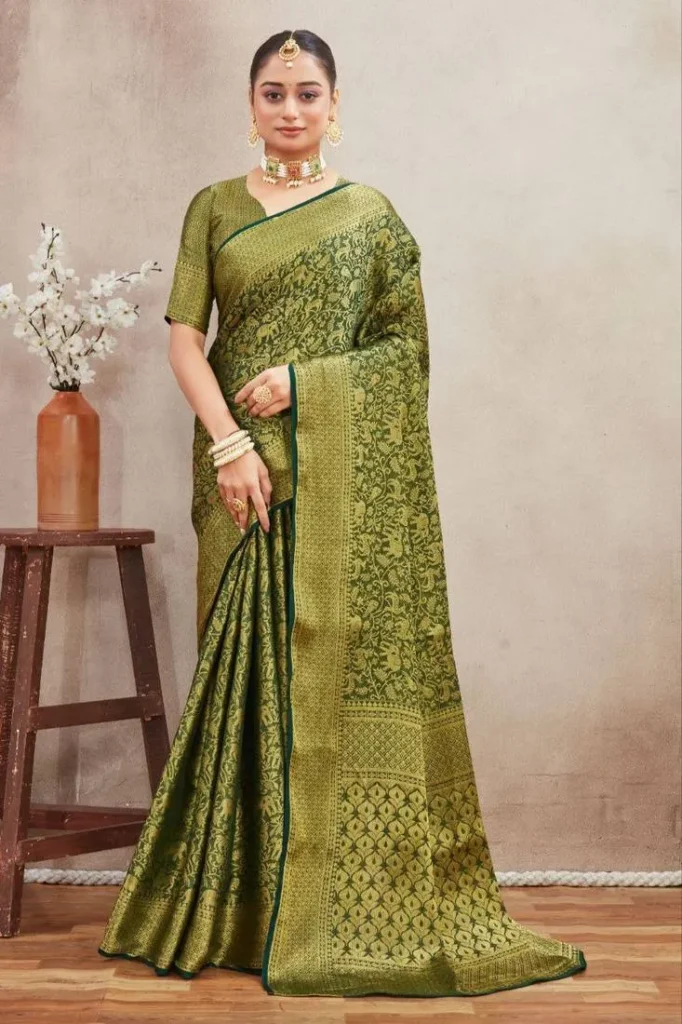
9. Muga Silk Saree (Assam)
Muga silk sarees are made from a rare type of silk that is found only in Assam. These sarees are famous for their natural golden color and exceptional durability. Muga silk becomes shinier with every wash and can last for generations. Traditionally worn during festivals and weddings in Assam, these sarees often feature simple yet elegant motifs inspired by nature. Muga silk sarees are considered a symbol of Assamese heritage and luxury.
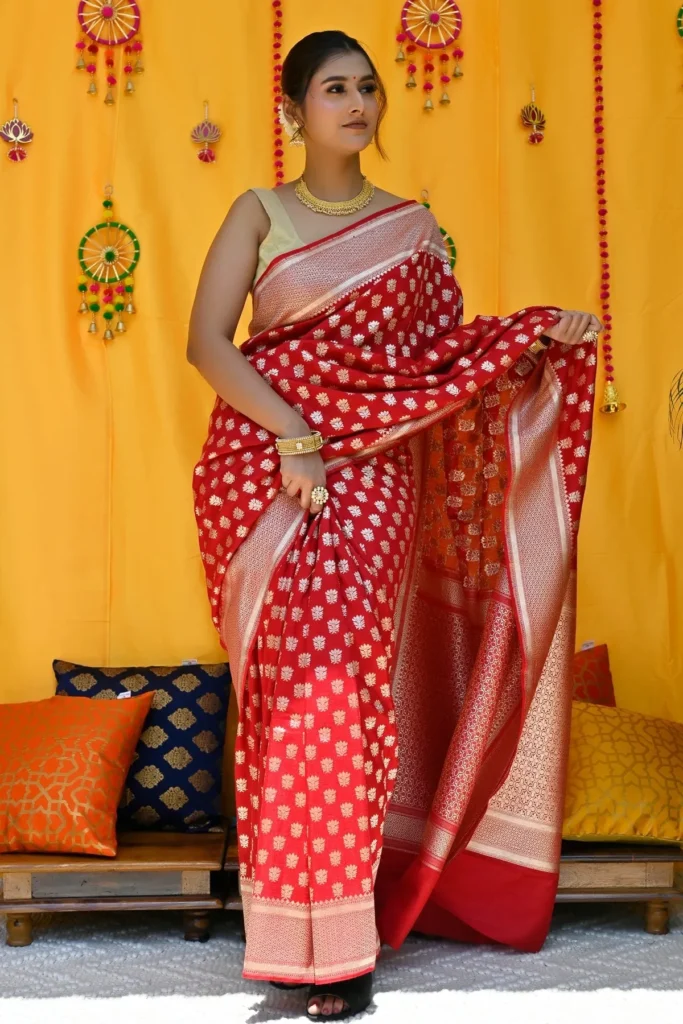
10. Kasavu Saree (Kerala)
Kasavu sarees are traditional sarees worn in Kerala and are easily recognized by their off-white or cream color with golden borders. These sarees are usually made from cotton, making them lightweight and comfortable. Kasavu sarees are commonly worn during festivals such as Onam and Vishu. Their simple yet elegant design reflects the minimalistic aesthetic of Kerala culture and makes them one of the most iconic types of sarees in India.
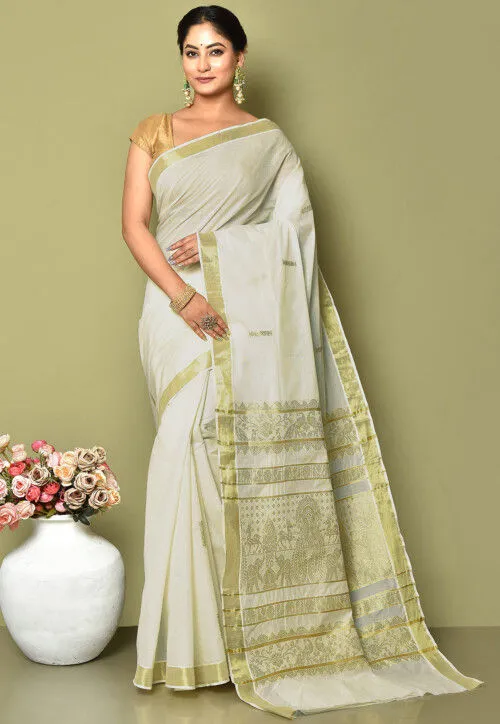
11. Tant Saree (West Bengal)
Tant sarees are lightweight cotton sarees from West Bengal that are perfect for hot and humid climates. These sarees are known for their crisp texture, breathable fabric, and traditional woven borders. Tant sarees often feature bright colors and simple patterns, making them suitable for daily wear as well as cultural events. Because of their comfort and practicality, they are widely worn by women across Bengal.
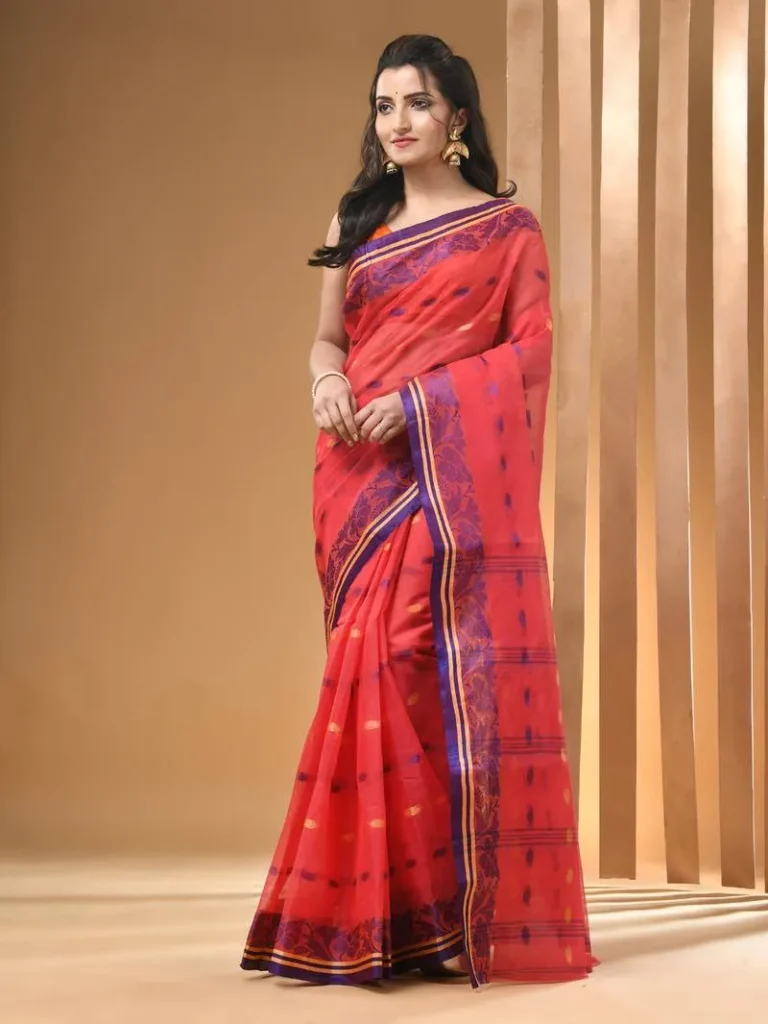
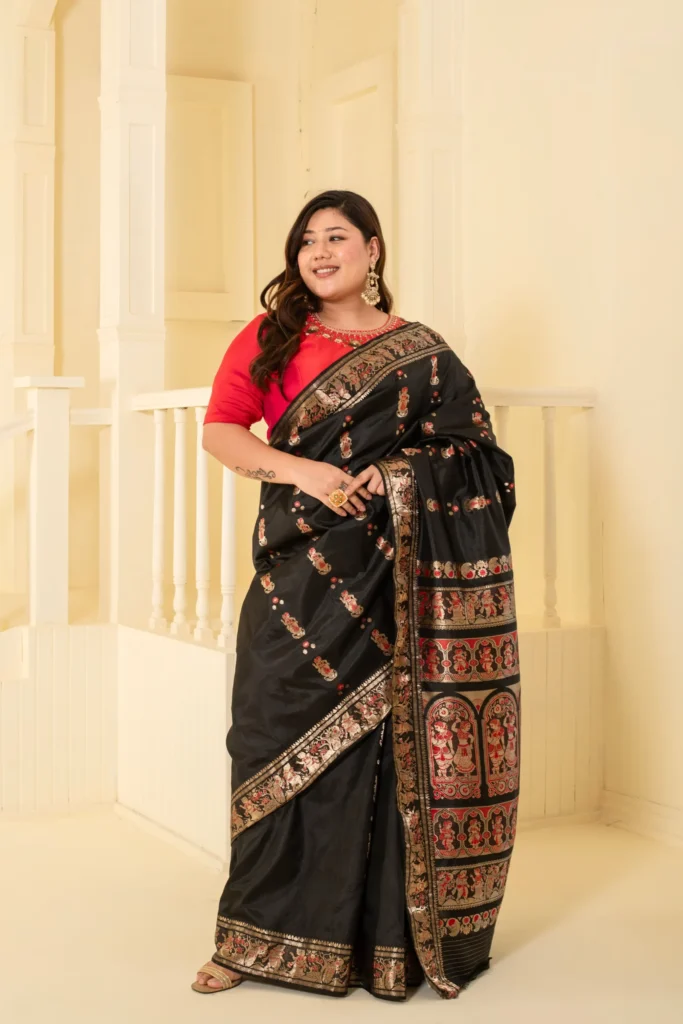
12. Baluchari Saree (West Bengal)
Baluchari sarees are famous for their artistic motifs woven into the pallu, which often depict scenes from Indian mythology and historical stories. Originating from West Bengal, these sarees are typically made from silk and feature intricate designs created using traditional weaving techniques. The storytelling patterns on Baluchari sarees make them unique among the many different types of sarees in India.
13. Pochampally Saree (Telangana)
Pochampally sarees are known for their distinctive ikat weaving technique and geometric patterns. These sarees originate from the town of Pochampally in Telangana and are made using silk, cotton, or a blend of both. The unique dyeing and weaving process creates symmetrical patterns that are visually striking. Pochampally sarees are appreciated for their vibrant colors and contemporary appeal.
14. Maheshwari Saree (Madhya Pradesh)
Maheshwari sarees originated in the town of Maheshwar in Madhya Pradesh and are known for their elegant silk-cotton blend fabric. These sarees feature simple yet stylish designs with striped or checkered patterns and decorative borders. Maheshwari sarees are lightweight, making them comfortable for long hours of wear. They combine traditional craftsmanship with modern elegance.
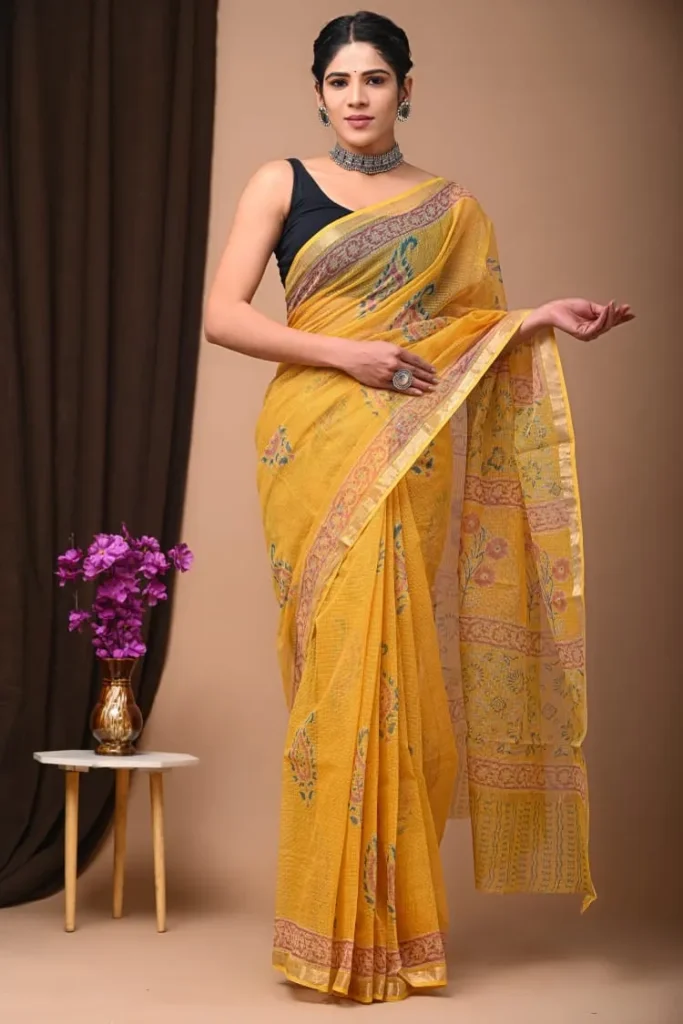
15. Kota Doria Saree (Rajasthan)
Kota Doria sarees are lightweight sarees from Rajasthan that are famous for their distinctive checkered pattern known as “khats.” These sarees are woven using a blend of cotton and silk, which makes them breathable and comfortable. Because of their airy texture and elegant appearance, Kota Doria sarees are ideal for summer wear and formal occasions.
16. Bhagalpuri Silk Saree (Bihar)
Bhagalpuri silk sarees come from Bhagalpur in Bihar and are widely known as “Tussar silk sarees.” These sarees are made from natural silk and are famous for their rich texture and natural sheen. Bhagalpuri silk sarees are often used in both traditional and modern fashion designs due to their versatility and elegance.
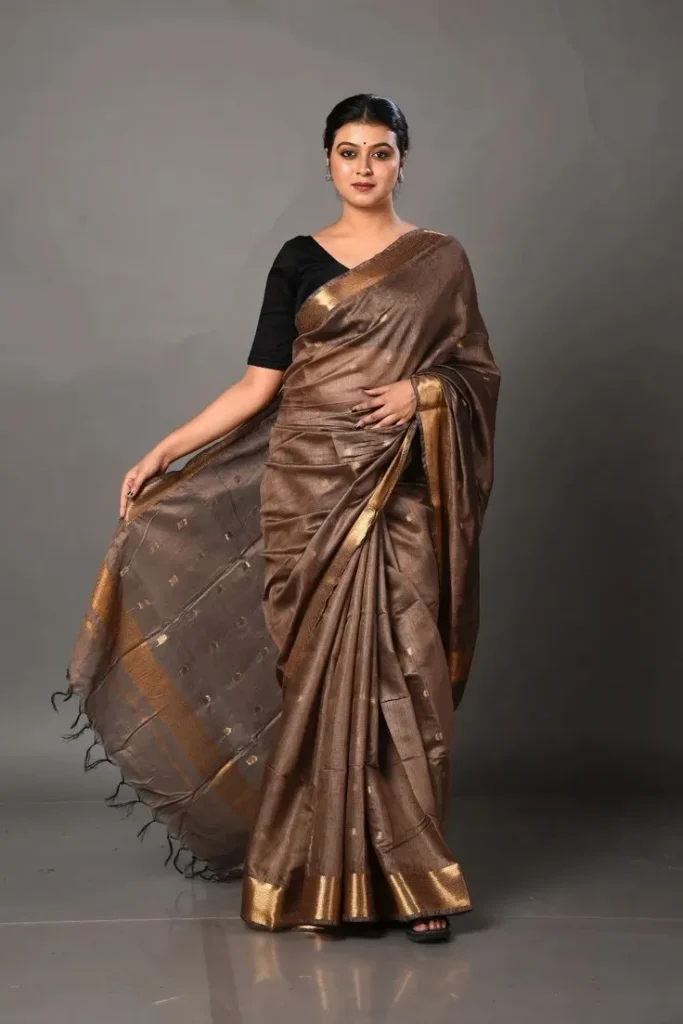
17. Bomkai Saree (Odisha)
Bomkai sarees are traditional handloom sarees from Odisha that combine tribal artistry with intricate weaving techniques. These sarees often feature elaborate borders and traditional motifs such as fish, flowers, and geometric patterns. Bomkai sarees are considered both artistic and culturally significant.
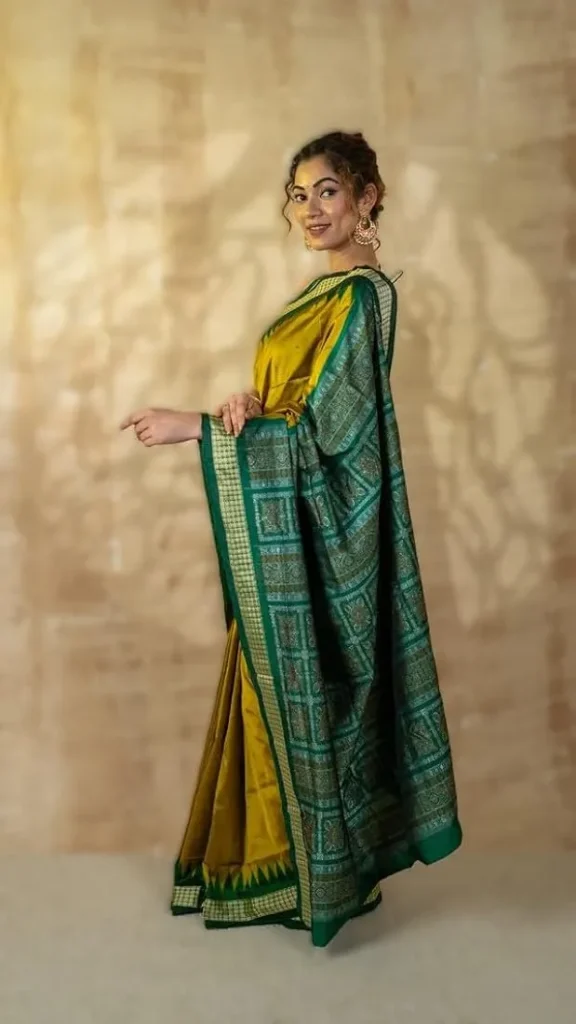
18. Kosa Silk Saree (Chhattisgarh)
Kosa silk sarees are made from a special type of silk produced in Chhattisgarh. These sarees are known for their earthy colors and natural texture. Kosa silk is highly durable and retains its shine for many years. Because of their simplicity and elegance, these sarees are suitable for both traditional and formal occasions.
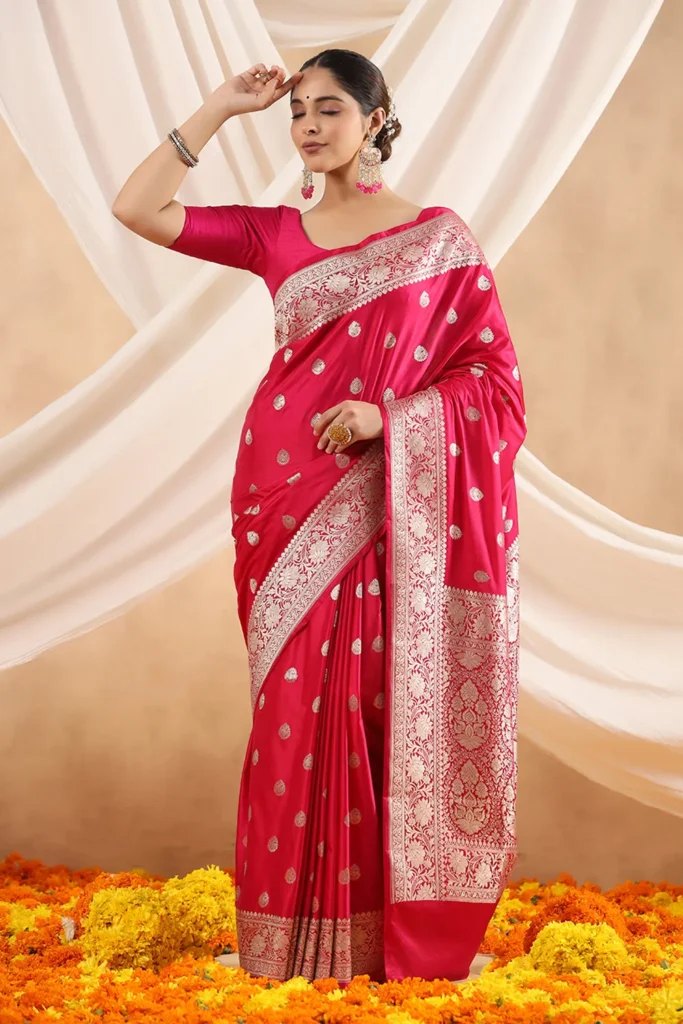
19. Gadwal Saree (Telangana)
Gadwal sarees are known for their unique combination of silk and cotton fabrics. Typically, the body of the saree is made from cotton while the borders and pallu are woven with silk. This combination makes the saree lightweight yet luxurious. Gadwal sarees are often worn during festivals and special occasions.
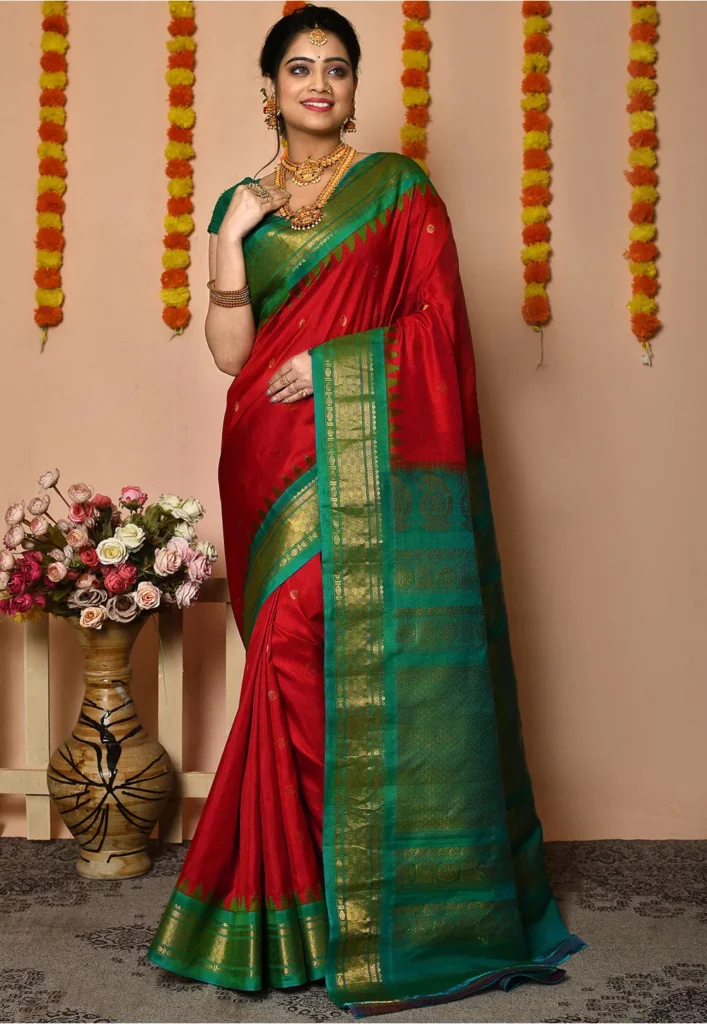
20. Uppada Saree (Andhra Pradesh)
Uppada sarees are luxurious silk sarees known for their lightweight texture and intricate handwoven patterns. These sarees originate from the town of Uppada in Andhra Pradesh and are crafted using traditional jamdani weaving techniques. Uppada sarees often feature delicate floral designs and elegant borders.
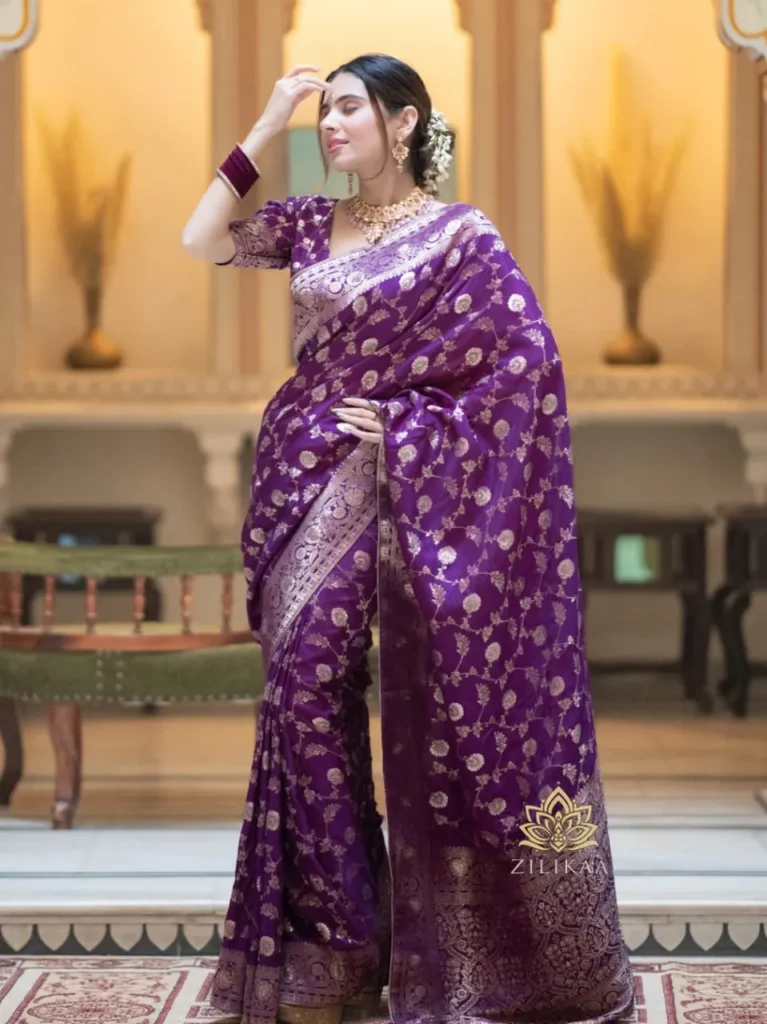
21. Jamdani Saree (West Bengal)
Jamdani sarees are fine muslin sarees with delicate floral and geometric motifs woven directly into the fabric. These sarees are known for their soft texture and lightweight feel. Jamdani weaving is a highly skilled craft that produces some of the most elegant sarees in India.
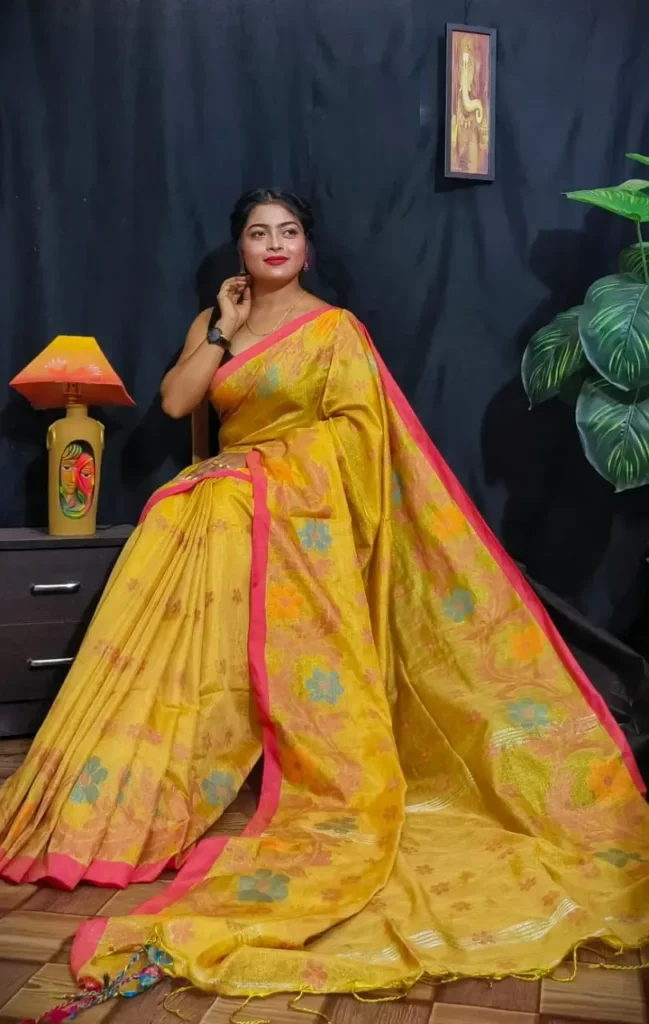
22. Kantha Saree (West Bengal)
Kantha sarees are known for their beautiful hand embroidery created using simple running stitches. These sarees are usually made from soft fabrics and decorated with colorful thread patterns. Kantha embroidery reflects folk art traditions and gives the saree a unique handmade appearance.
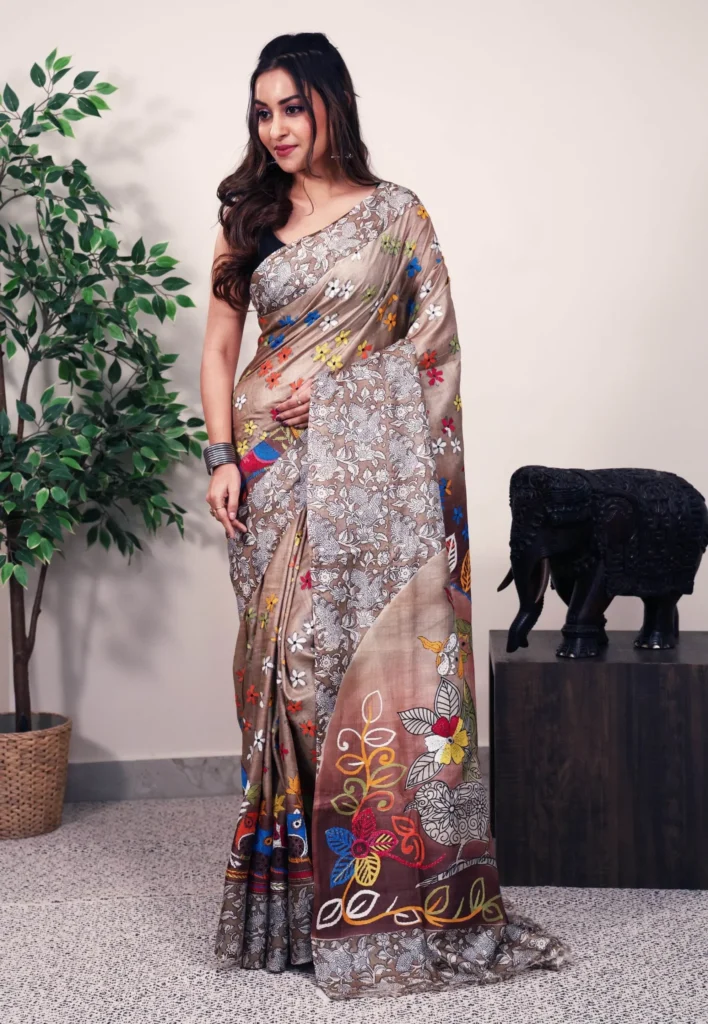
23. Phulkari Saree (Punjab)
Phulkari sarees are inspired by the traditional embroidery style of Punjab. These sarees feature vibrant floral patterns created using colorful threads. Phulkari designs are known for their bold and cheerful appearance, making them perfect for festive occasions.
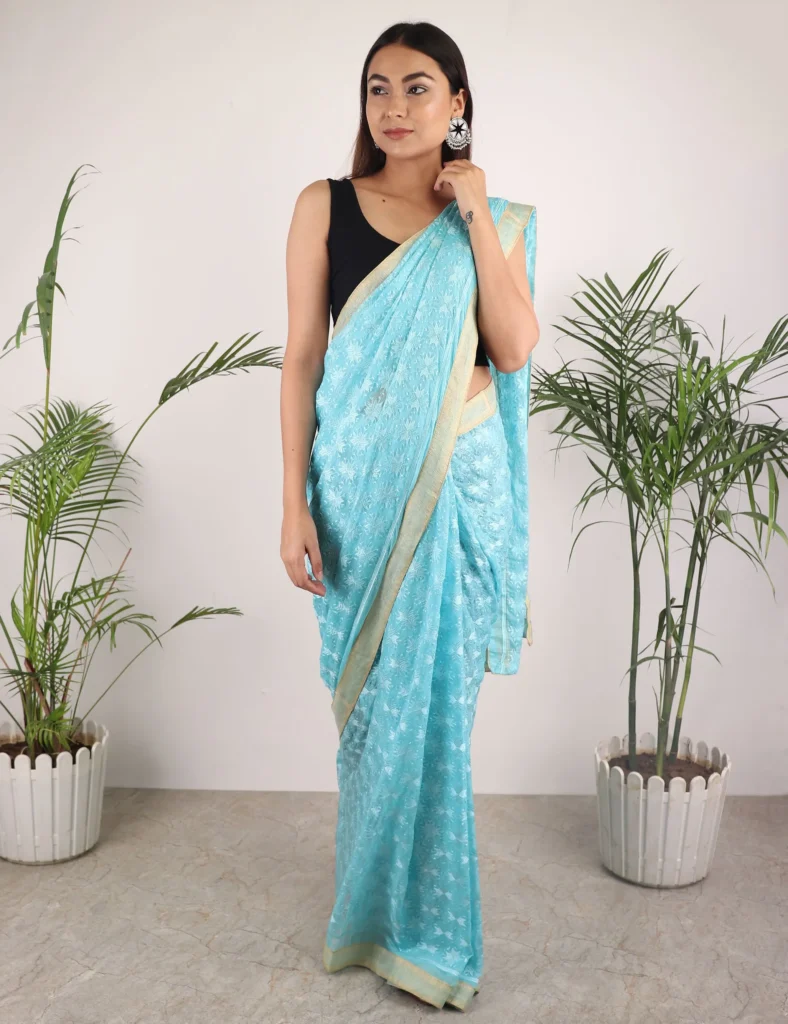
24. Coorgi Saree (Karnataka)
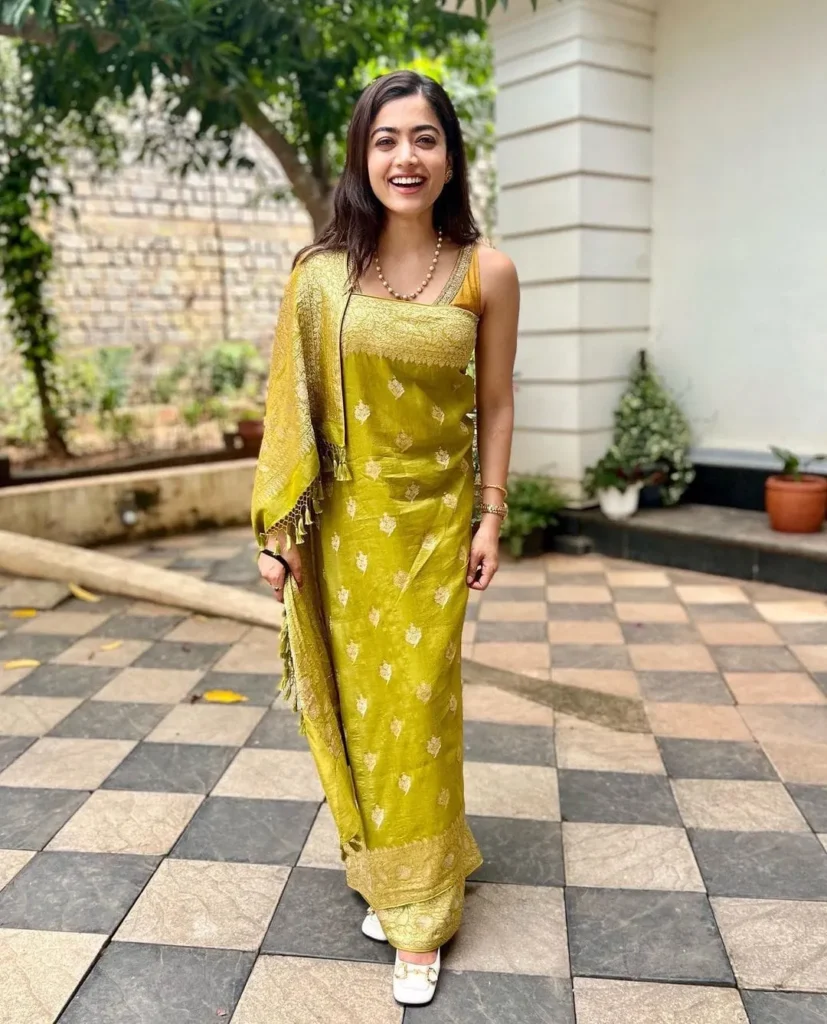
Coorgi sarees are worn by women in the Kodagu region of Karnataka and are known for their unique draping style. Unlike regular sarees, the pleats are arranged differently and the pallu is draped over the shoulder from the back. This style reflects the traditional culture of the region.
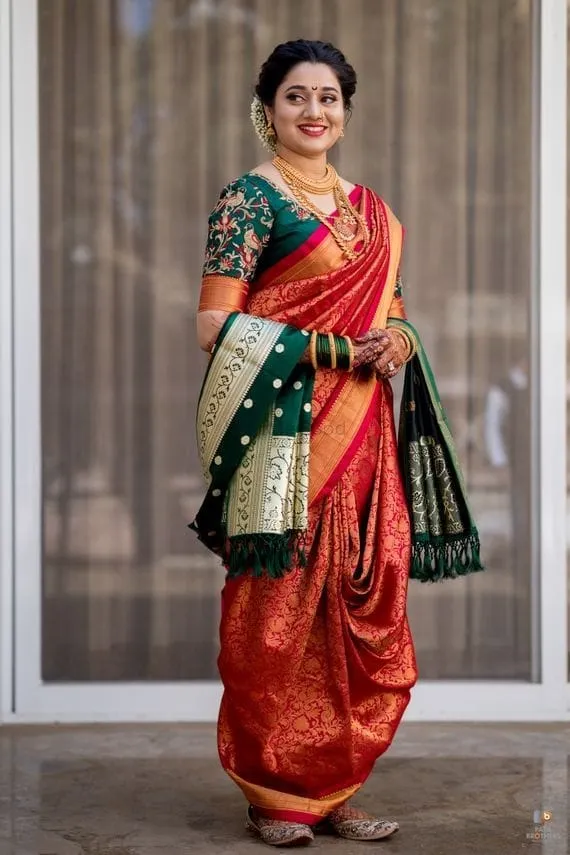
25. Nauvari Saree (Maharashtra)
Nauvari sarees are traditional nine-yard sarees worn by women in Maharashtra. These sarees are draped in a style similar to a dhoti, allowing greater ease of movement. Historically, women warriors in Maharashtra wore Nauvari sarees during battle.
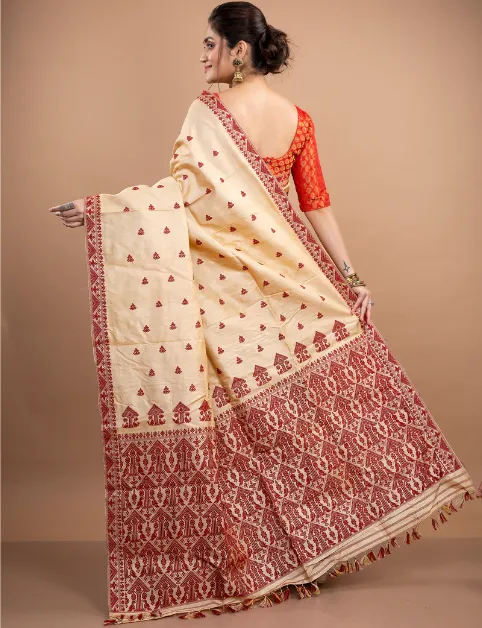
26. Assam Silk Saree
Assam silk sarees are made using high-quality silk produced in the northeastern region of India. These sarees often feature elegant motifs inspired by nature and Assamese culture. They are widely worn during festivals and weddings.
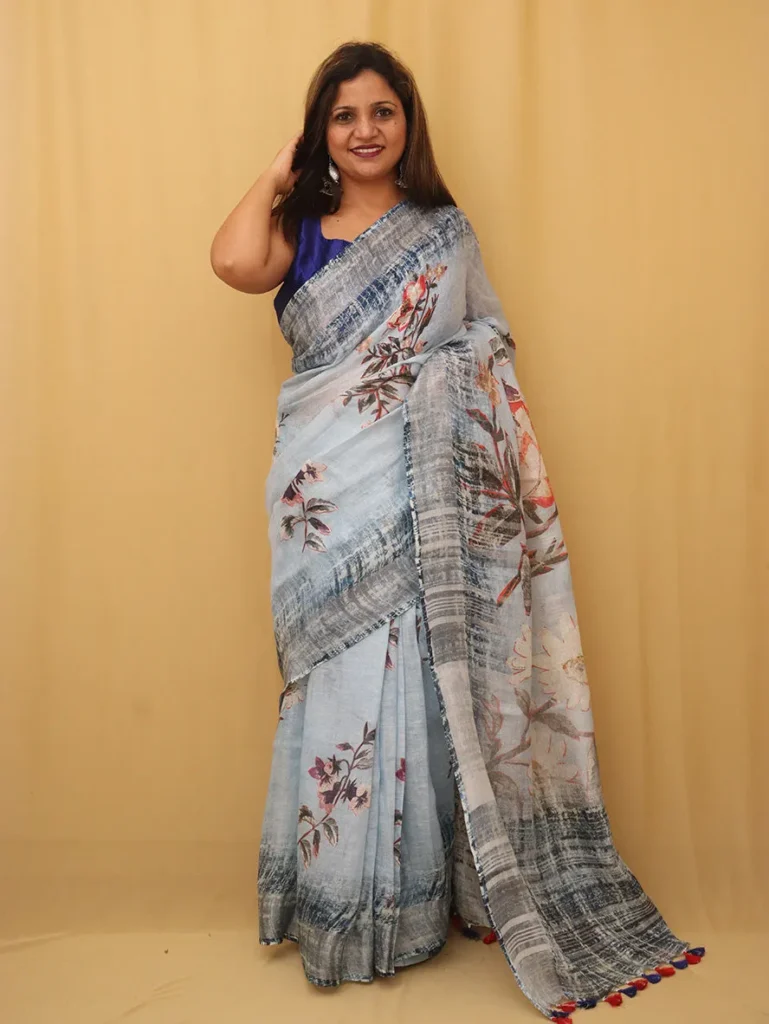
27. Linen Saree
Linen sarees are modern sarees known for their breathable fabric and minimalistic elegance. These sarees are lightweight, comfortable, and perfect for office wear or casual occasions. Linen sarees combine traditional draping with contemporary fashion.
How to Identify Different Types of Sarees
India is home to hundreds of different types of sarees, and each region has its own unique weaving tradition. Identifying various saree type names may seem difficult at first, but once you understand the basic characteristics such as fabric, weaving style, patterns, and region of origin, it becomes much easier.
One of the easiest ways to identify Indian saree types is by examining the fabric. For example, Banarasi and Kanjivaram sarees are made from rich silk and usually feature heavy zari work, while cotton sarees like Tant or Kota Doria are lightweight and breathable.
Another important factor is the weaving technique. Sarees like Patola and Pochampally are recognized for their ikat weaving patterns, while Bandhani sarees are identified by their tie-dye designs. Similarly, Paithani sarees often feature peacock motifs and vibrant colors woven with gold threads.
The border and pallu design can also help identify the type of saree. Many traditional sarees have distinctive borders that reflect the culture of their region. For instance, Kasavu sarees from Kerala have simple golden borders, while Banarasi sarees feature elaborate brocade patterns.
By observing these elements—fabric, weaving style, motifs, and borders—you can easily recognize many popular sarees in India.
Types of Sarees Based on Fabric
Sarees in India are made from a wide variety of fabrics, and the fabric plays a major role in determining the saree’s comfort, style, and occasion suitability. Understanding fabrics also helps in recognizing different types of sarees in India.
Silk Sarees
Silk sarees are among the most luxurious Indian saree types and are usually worn during weddings, festivals, and special occasions. They are known for their rich texture, glossy appearance, and intricate weaving.
Some popular silk sarees include:
- Banarasi Saree
- Kanjivaram Saree
- Mysore Silk Saree
- Paithani Saree
- Patola Saree
Silk sarees often feature zari work, traditional motifs, and elaborate borders that give them a royal appearance.
Cotton Sarees
Cotton sarees are lightweight, breathable, and perfect for everyday wear, especially in hot climates. They are known for their comfort and simplicity.
Common cotton saree type names include:
- Tant Saree
- Kota Doria Saree
- Kasavu Saree
- Sambalpuri Cotton Saree
These sarees are ideal for casual wear, office use, and daily activities.
Linen Sarees
Linen sarees are modern and stylish sarees known for their soft texture and breathable fabric. They have gained popularity in recent years for office wear and contemporary fashion.
Linen sarees combine traditional draping with a modern minimalist aesthetic, making them a favorite among young professionals.
Best Sarees for Different Occasions
Choosing the right saree for a particular occasion is important because different Indian saree types are suited for different events.
Wedding Sarees
For weddings and grand celebrations, silk sarees are usually the preferred choice. They have a luxurious look and traditional appeal that makes them ideal for bridal wear.
Popular wedding sarees include:
- Banarasi Saree
- Kanjivaram Saree
- Paithani Saree
- Patola Saree
These sarees often feature heavy zari work and intricate designs.
Festival Sarees
Festivals are the perfect time to wear colorful and vibrant sarees that reflect cultural traditions.
Some popular festival sarees include:
- Bandhani Saree
- Sambalpuri Saree
- Pochampally Saree
These sarees are known for their bold colors and artistic patterns.
Office and Casual Wear Sarees
For daily wear or office use, lightweight sarees are the most comfortable option.
Suitable saree types include:
- Linen Sarees
- Cotton Sarees
- Chanderi Sarees
These sarees offer elegance without being too heavy or elaborate.
How to Choose the Right Saree
With so many different types of sarees available, choosing the right one can sometimes feel overwhelming. However, considering a few key factors can help you make the best choice.
Consider the Occasion
The first step in choosing a saree is identifying the occasion. For weddings and celebrations, silk sarees with rich designs work best. For casual events or office wear, lightweight cotton or linen sarees are more suitable.
Choose the Right Fabric
Fabric plays an important role in comfort and style. Silk sarees offer a luxurious feel, while cotton and linen sarees provide comfort for long hours.
Select the Right Color
Color selection depends on personal preference as well as the event. Bright and vibrant colors are ideal for festive occasions, while subtle shades are suitable for formal settings.
Check the Quality
Always pay attention to the weaving quality and fabric authenticity. Authentic handloom sarees often have slight irregularities that indicate handcrafted work.
History of Sarees in India
The saree is one of the oldest garments in the world and has been a part of Indian culture for thousands of years. Historical evidence suggests that sarees were worn as early as the Indus Valley Civilization.
Ancient sculptures and paintings show women draped in garments similar to the modern saree. Over time, different regions in India developed their own weaving traditions, giving rise to the diverse types of sarees in India that we see today.
During the Mughal period, saree designs became more elaborate, incorporating intricate patterns, zari work, and luxurious fabrics like silk. This period greatly influenced famous sarees such as the Banarasi saree.
Even today, sarees remain an important symbol of Indian heritage and cultural identity.
Different Saree Draping Styles
India is not only known for its variety of sarees but also for the many unique ways in which they are draped. Each region has its own traditional draping style that reflects local customs.
Nivi Style
The Nivi drape is the most common saree draping style and originated in Andhra Pradesh. It involves pleating the saree in the front and draping the pallu over the shoulder.
Bengali Style
The Bengali drape features wide pleats and a pallu that is wrapped around both shoulders. This style is commonly worn during Durga Puja.
Gujarati Style
In the Gujarati drape, the pallu is brought from the back to the front and draped across the chest. This style beautifully showcases the design of the pallu.
Nauvari Style
The Nauvari drape from Maharashtra uses a nine-yard saree and is worn in a dhoti-like style that allows greater mobility.
Coorgi Style
The Coorgi drape from Karnataka features pleats at the back and a unique pallu arrangement.
How to Care for Sarees
Proper care is essential to maintain the beauty and longevity of sarees, especially delicate handloom varieties.
Store Sarees Properly
Sarees should be stored in a cool and dry place. Using cotton or muslin cloth to wrap sarees helps protect them from moisture.
Avoid Direct Sunlight
Prolonged exposure to sunlight can fade the colors of sarees, especially silk ones.
Dry Clean Silk Sarees
Silk sarees should ideally be dry cleaned to preserve their fabric and zari work.
Fold Sarees Regularly
Refolding sarees every few months helps prevent permanent creases and fabric damage.
Taking proper care ensures that sarees can be preserved for many years and even passed down as family heirlooms.
Famous Saree Weaving Regions in India
India has many regions known for producing unique saree type names with distinctive weaving techniques.
Some famous saree weaving regions include:
- Varanasi (Uttar Pradesh) – Banarasi Sarees
- Kanchipuram (Tamil Nadu) – Kanjivaram Sarees
- Patan (Gujarat) – Patola Sarees
- Sambalpur (Odisha) – Sambalpuri Sarees
- Maheshwar (Madhya Pradesh) – Maheshwari Sarees
These regions have preserved traditional handloom techniques for generations, making them important centers of textile heritage.
Why Indian Sarees Are Famous Worldwide
Indian sarees have gained global recognition for their beauty, craftsmanship, and cultural significance. Many international designers and fashion enthusiasts admire the artistry involved in creating traditional sarees.
One reason for their popularity is the handloom craftsmanship used in weaving many traditional sarees. Skilled artisans spend weeks or even months creating intricate designs.
Another reason is the diversity of styles and fabrics. From luxurious silk sarees to comfortable cotton varieties, there are sarees suitable for every occasion and climate.
Additionally, sarees are considered a symbol of timeless elegance. Many celebrities and fashion icons around the world have embraced sarees on international platforms, increasing their global appeal.
Conclusion:
India’s rich textile heritage is beautifully reflected in the wide variety of sarees found across the country. From luxurious silk sarees like Banarasi and Kanjivaram to lightweight cotton sarees such as Tant and Kota Doria, each saree represents the culture and traditions of its region.
Understanding the different types of sarees, their fabrics, and their origins helps us appreciate the incredible craftsmanship behind these garments. Whether worn for weddings, festivals, or everyday occasions, sarees continue to be a timeless symbol of elegance and tradition.
With so many saree type names and styles available, the saree remains one of the most versatile and beloved garments in Indian fashion.
FAQs – Saree Type Names & Types of Sarees in India
1. What are the different types of sarees in India?
India has many traditional saree varieties that reflect regional culture and weaving traditions. Some of the most popular saree type names include Banarasi, Kanjivaram, Paithani, Bandhani, Patola, Chanderi, Sambalpuri, Mysore Silk, Kasavu, and Tant sarees. Each saree has a unique fabric, weaving technique, and design that represents the culture of its state.
2. Which saree is the most famous in India?
Banarasi sarees and Kanjivaram sarees are considered the most famous sarees in India. Banarasi sarees from Varanasi are known for their rich silk fabric and intricate zari work, while Kanjivaram sarees from Tamil Nadu are famous for their heavy silk and contrasting borders, making them popular for weddings and festivals.
3. How many types of sarees are there in India?
India has hundreds of traditional saree varieties created by different weaving communities across the country. However, around 25–30 saree types such as Banarasi, Kanjivaram, Paithani, Patola, Bandhani, and Chanderi are widely recognized as the most popular sarees in India.
4. Which saree is best for weddings?
Silk sarees are the most preferred choice for weddings. Banarasi sarees, Kanjivaram sarees, Paithani sarees, and Patola sarees are considered ideal bridal sarees because of their rich fabric, intricate weaving, and traditional significance.
5. Which saree is best for daily wear?
For everyday wear, lightweight cotton or linen sarees are the best option. Sarees such as Tant sarees, Kota Doria sarees, and linen sarees are breathable, comfortable, and easy to maintain, making them perfect for office wear or daily use.
6. Which Indian state is famous for Banarasi sarees?
Banarasi sarees originate from Varanasi in the state of Uttar Pradesh. These sarees are known for their luxurious silk fabric, detailed brocade patterns, and traditional craftsmanship that dates back several centuries.
7. What fabric is commonly used in traditional Indian sarees?
Traditional Indian sarees are commonly made from silk, cotton, linen, and chiffon fabrics. Silk sarees are usually worn during weddings and festivals, while cotton and linen sarees are preferred for everyday comfort and office wear.
8. Why are Indian sarees famous worldwide?
Indian sarees are famous worldwide because of their intricate handloom craftsmanship, rich cultural heritage, and variety of fabrics and designs. Each region in India produces unique sarees that reflect traditional weaving techniques and artistic patterns.